


You are here:
Industrial Floors - Renovation, Repair, and Coating of Existing Floors
Quantec Industrieböden® GmbH is your specialist for industrial flooring in the industrial, logistics, and commercial sectors: We renovate existing surfaces, repair damage to joints and cracks, and install heavy-duty coating systems based on EP, AC, and PU—all planned to accommodate downtime and operational requirements.
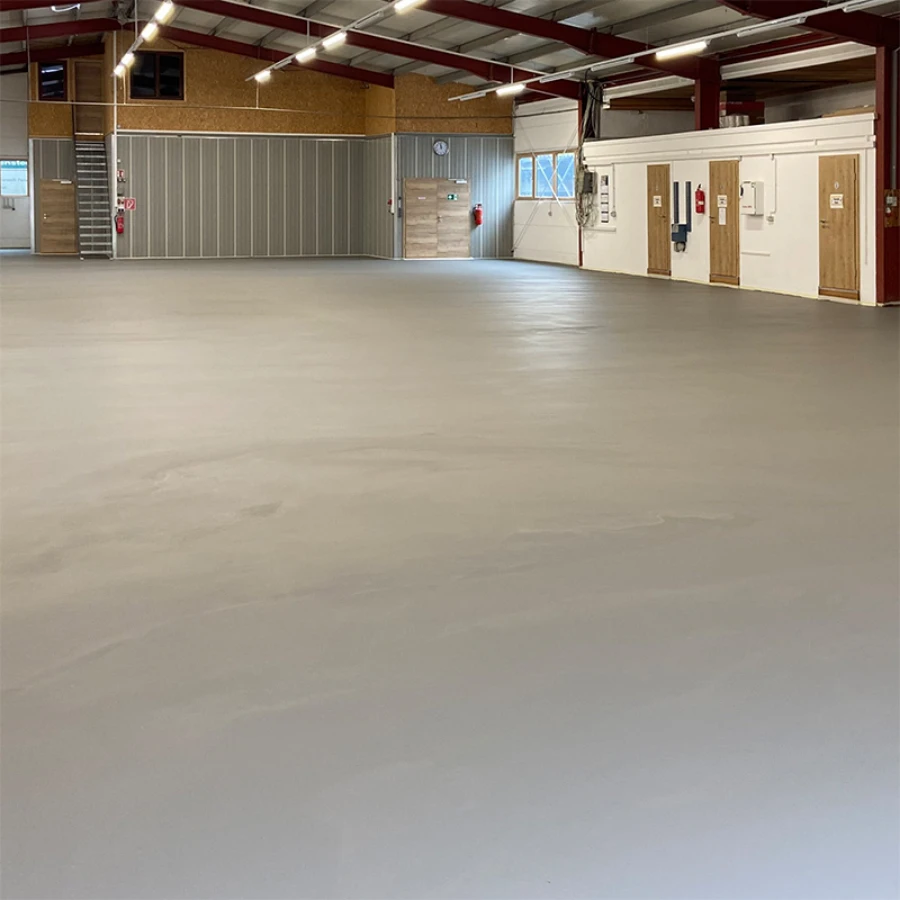
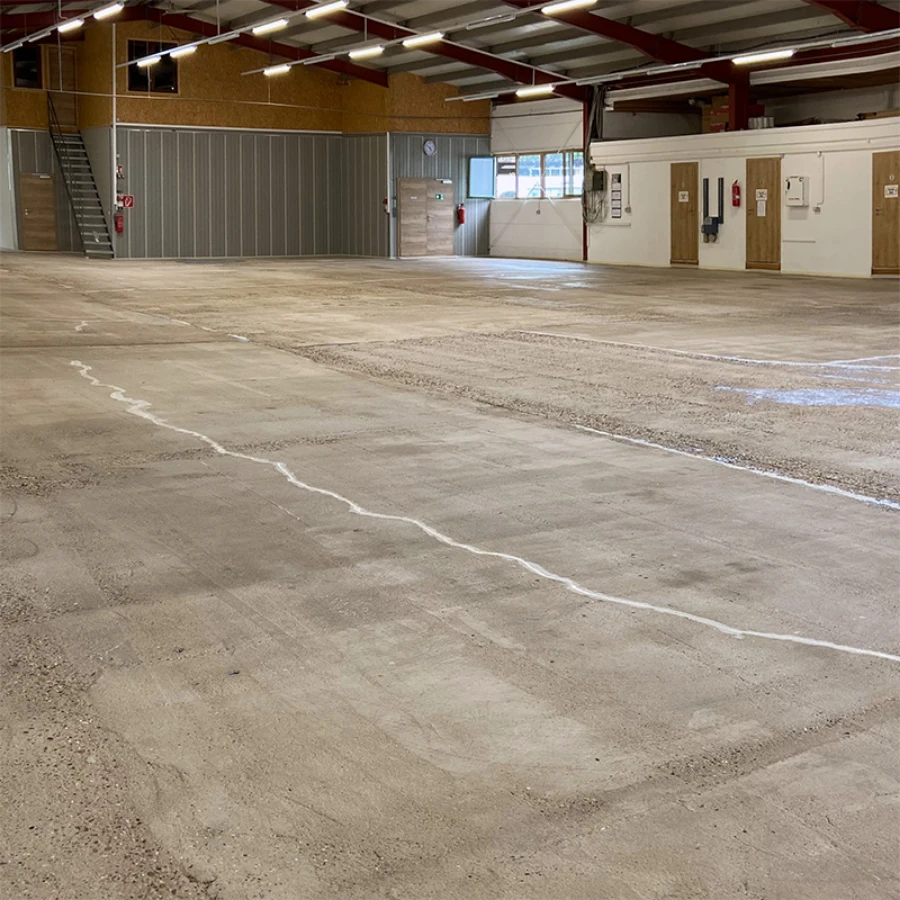
Industrial floors rarely fail “across the entire surface,” but rather at specific hotspots: traffic lanes, transition areas, edge zones, and joint edges. That is exactly where spalling, chipped edges, and recurring disruptions in the material flow occur. Our approach starts with the existing floor—with clear section planning and in-house execution.
Why Quantec?
Your Partner for Durable Industrial Floor Renovation
We don’t see ourselves as merely a service provider, but as a reliable partner at your side. Every renovation is planned carefully and precisely, carried out using high-quality materials, and designed for long-term use. This results in cost-effective and durable solutions for your industrial floor.

Heavy-Duty Solutions
For very high point loads and high-traffic areas.
Implementation Suited to Operational Needs
Renovation work can be carried out at night, on weekends, or in sections while operations continue.
Certified systems are possible
Designs that comply with, for example, WHG requirements, if the area is subject to regulatory requirements.
Everything from a single source
Our own fleet of machinery; 100% in-house work with no subcontractors.
Predictability Instead of Unpredictable Closed Areas
Many operators take a “reactive” approach to repairs until lanes become bumpy and traffic comes to a standstill. Quantec uses a prioritization strategy: first the hotspots, then the rest of the surface—with predictable reopening schedules and a process that safeguards operations.
What this means in practice
What this means in practice
- Focus on hotspots (joints, transitions, lanes)
- Section-by-section approach instead of full closures
- In-house execution instead of coordination risks with subcontractors
- Solutions for high point loads and logistical challenges

What's Needed for Industrial Floors
Industrial floors are a system consisting of the overall surface, specific zones, and function
An industrial floor must withstand point loads, rolling loads, maneuvering, and cleaning on a daily basis. The critical areas are the detail zones, because that is where stresses are concentrated: joint edges, transitions, perimeter zones, and traffic lanes. Quantec evaluates these zones and implements measures to reduce downtime and ensure that the usable floor area remains predictable.
Renovation and Repair
Industrial Floor Remediation
When damage recurs along major traffic routes, zone-based or large-scale rehabilitation is often more cost-effective than repeated individual repairs. The goal is to create a stable surface with a controlled reopening schedule.
Site Remediation (Hotspots)
Localized cracks, spalling, or damaged edges are repaired with pinpoint accuracy before the damage spreads. Ideal for traffic lanes, crossings, and high-priority areas.
Crack Repair
Cracks are not “simply closed,” but are treated in such a way that edges in traffic areas remain stable and secondary damage is reduced. It is crucial to distinguish between a static crack and a movement-related separation.
Joints and Transitions
Expansion Joint Repair
Expansion joints are often the cause of edge spalling and recurring repair needs. Proper rehabilitation stabilizes the joint flanks and keeps the transitions passable.
Construction Joints
Expansion joints between building sections must accommodate movement while remaining safe for vehicles to drive over. The renovation restores functionality and the stability of the joints.
Heavy-duty profiles
Heavy-duty profiles provide mechanical protection for edges and transitions—especially in gate, ramp, and high-traffic areas. They reduce damage in areas where peak loads occur repeatedly.
Coatings
Industrial Floor Coatings (Pillar)
Coatings are selected based on load profile, cleaning, downtime, and special requirements. The focus is on stable detail areas and predictable section approvals.
Epoxy Resin Coating (EP)
EP systems are particularly well-suited when abrasion, rolling loads, and point loads are the dominant factors. Proper surface preparation is crucial to ensure that transitions and edge areas can bear loads over the long term.
Acrylic Resin Coating (AC)
When short downtime windows are critical, AC may be the right system approach. The benefit comes from fast release combined with smooth transition control.
Polyurethane (PU) Coating
PU systems are a good choice when more elastic material properties or specific surface requirements are needed. Traction and cleanability are specifically tailored to the intended use.
Soil Sealing
Sealants are useful when the surface is structurally sound, but dust, open pores, or increased cleaning requirements are hindering operations. Proper substrate preparation is crucial to ensure that the surface closes with few pores and that sealant does not seep into detailed areas such as joints, connections, and transitions.
Special Requirements
WHG Coating
For areas with requirements for leak tightness and chemical resistance—including precise detailing at junctions and connections.
Chemical-Resistant Industrial Flooring
Durability is designed with the media list, exposure time, and cleaning in mind to ensure that the surface performs reliably in everyday use.
ESD flooring / conductive flooring
Conductivity is a combination of design and integration—not just a surface coating. The goal is to ensure stable ESD performance during operation, even under conditions of abrasion and cleaning.
Slip-resistant flooring (R9-R13)
Slip resistance is planned on a zone-by-zone basis so that critical areas are made slip-resistant without making the entire surface unnecessarily difficult to clean.
Fast-curing industrial floor
If the bottleneck is a restricted-access period, an implementation that opens access in sections according to traffic logic is effective.
Logistics-Related Services
Swap Body Parking Spaces
Parking spaces in the loading and unloading area are repaired before damage leads to disruptions, uneven surfaces, and restricted areas.
Installing Induction Loops
Induction loops are installed as a durable floor component: the slot guide and encapsulation must withstand traffic and cleaning.
Industrial Floor Inspection
Usage, type of damage, time window, hotspots.
Prioritization
Which zones cause downtime and associated costs?
Package of Measures
Combine joints, cracks, profiles, and coatings in a practical way.
Implementation & Approval
in sections, aligned with transportation routes.
Before
Afterward
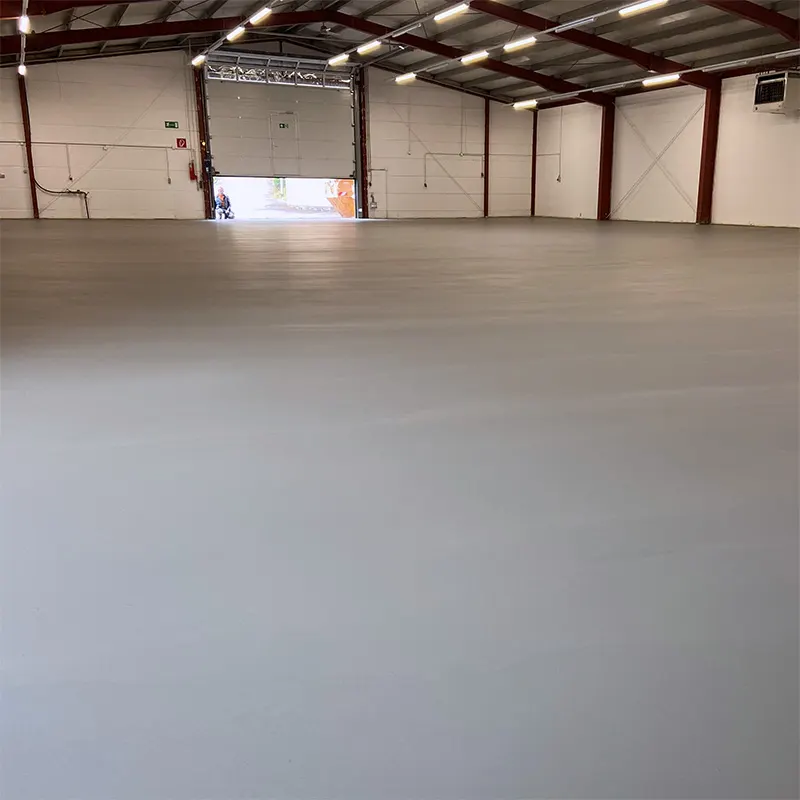
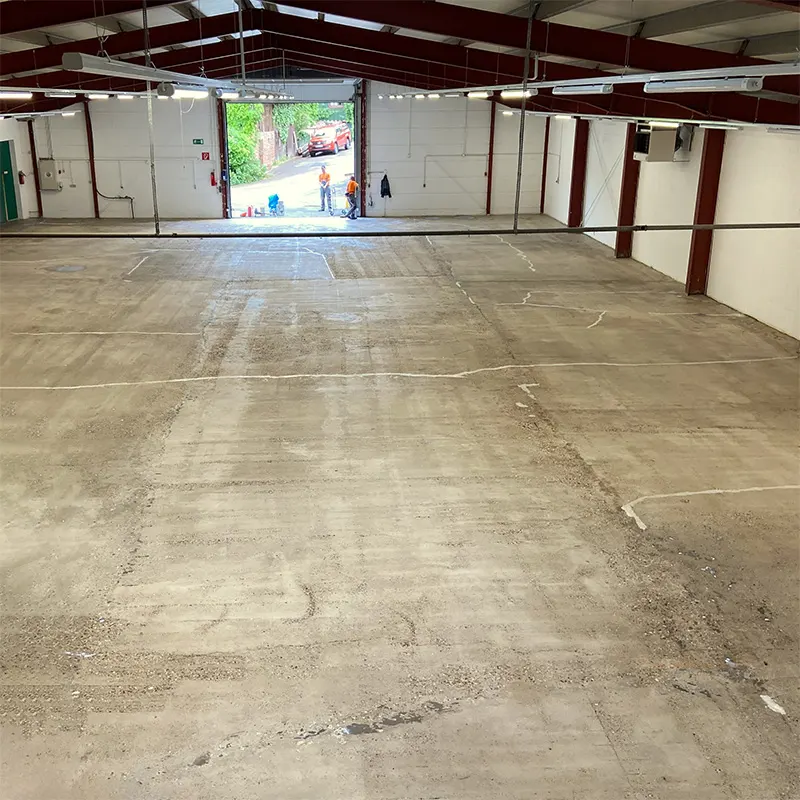
Manufacturing | Logistics | Commercial · Stabilize joint edges · Reduce consequential damage · Predictable approval
Types and Variants
Industrial floors as conductive flooring (ESD) in EPA areas
| Typical Uses | Electronics Assembly, Test Fields, ESD Storage, Order Picking with ESDS |
| Operating Principle | The system design enables the controlled dissipation of electrostatic charge via defined dissipation paths and grounding points |
| Delimitation | ESD is systemic, Not every sealant or refinish is compatible, Transitions must be planned |
| Design Parameters | Industry-specific field | Decision relevance |
|---|---|---|
| Target Class | dissipative/conductive (project-specific) | Specifications Based on Measurement Values |
| Transitions | ESD ↔ Non-ESD | Avoid functional islands |
| Abrasion Hotspots | Walkways/Work Stations | Plan for Functional Drift |
| Cleaning | Defined resources/intervals | Film formation affects measured values |
| Detailed points | Grounding, Connections, Joints | Functional Continuity |
| Repairability | zonal | Operations Can Continue |
Industrial floors with a focus on joint and edge stability (Expansion joints, construction joints, profiles)
| Operating Principle | Service life is ensured by stable joint flanges, suitable joint fillers, and, if necessary, heavy-duty profiles, The goal is to reduce impact energy at transitions |
| Delimitation | Not just a “coating solution”, Without a joint edge zone strategy, recurring breakouts occur |
| Typical Uses | Forklift Axles, Intersections, Goal Lines, Areas with repeated edge joints |
| Design Parameters | Industry-specific field | Decision relevance |
|---|---|---|
| Time window | 2-8 hours / 8-24 hours | System Selection (MMA vs. EP/PU) |
| Section cycle | small to medium | Traffic Management During Construction |
| Early-life stress | high in hotspots | Details First |
| Temperature range | environment-dependent | Reaction Stability |
| Transitional Training | flush/beveled | Minimal sharp edges from the moment of initial release |
| Documentation | phased release | Mapping Operator Logic |
Industrial floors as a heavy-duty logistics surface (primarily subjected to wheel loads and shear forces)
| Operating Principle | Design focuses on recurring wheel loads, shear forces (curves/intersections), and impact loads, The surface must have few sharp edges and be wear-resistant |
| Delimitation | Compared to the “production floor,” material-handling equipment (forklifts, pallet jacks, trailer movements) and the stability of the transition zones are the dominant factors |
| Typical Uses | Warehouses, Handling Ranges, Tracks, Goalposts |
| Design Parameters | Industry-specific field | Decision relevance |
|---|---|---|
| Wheel load per wheel | approx. 20-80 kN | Determines hotspot and detailed layout |
| Shear stress | at intersections | Edge/Profile Strategy Required |
| Overrun Offset (Target) | as small as possible ≤ 1-2 mm | Impact Momentum and Risk of Breakout |
| Surface | compact to finely textured | Traktin vs. Cleanability |
| Hotspots | Door frames, cross members, built-in components | Prioritized detailed processing |
| Restricted Time Window | short to medium | System Selection (MMA vs. EP/PU) |
Industrial floors as a production area (proximity to production processes, media and cleaning requirements)
| Operating Principle | The surface is designed based on the application and cleaning profile (oils, cleaners, process media) as well as cleanliness and surface requirements |
| Delimitation | Traffic may be lighter, but in such cases, airtightness, low porosity, and compatible connection details are often crucial |
| Typical Uses | Assembly, Production Cells, Service Areas, process-related zones |
| Design Parameters | Industry-specific field | Decision relevance |
|---|---|---|
| Media Profile | defined (oil/cleaner/process) | Determines the system chemistry and topcoat |
| Exposure time | Splash contact to standing | Seal Detail and Coating Thickness Logic |
| Cleaning regimen | frequently/regularly | Surface Stability During Operation |
| Surface | low-porosity, closed-cell | Minimize entry paths |
| Detailed points | Edge Connections, Penetrations | Most Common Leak Paths |
| Traffic Profile | low to medium | Selecting the Right Wear Reserve |
Industrial floors with a slip-resistant surface (R9-R13) as a zoned safety concept
| Delimitation | A higher R-class rating increases cleaning requirements and wear hotspots across the board, A zoned solution is more technically stable |
| Typical Uses | Goal Zones, Exterior/Interior Transitions, Wet Cleaning, Service Stations |
| Operating Principle | Surface structure is classified into R classes based on the entry profile and intended use, Transitions are designed to be impact-resistant and easy to clean |
| Design Parameters | Industry-specific field | Decision relevance |
|---|---|---|
| Target R Class | Categorized by area | Safety vs. Care |
| Principle of Texture | fine to coarse | Traction vs. Cleanability |
| Entry Profile | Water/Dirt/Oil | determines the choice of structure and topcoat |
| Transitions | flush, without an edge joint | prevents new accidents/damage |
| Traffic Management | Walkway vs. Driveway | different requirements |
| Maintenance | predictable | The structure must remain easy to clean |
Industrial floors requiring renovation (from small areas to large surfaces) with a focus on the causes of damage
| Operating Principle | Structural damage is repaired first (spalling, delamination, cracks/joints), The surface is restored to full function (sealing, traction, durability) |
| Delimitation | "Just patching it up" without addressing the root cause leads to recurring damage |
| Typical Uses | Existing Areas with Repair History, unsteady crossing behavior, recurring outbreaks |
| Design Parameters | Industry-specific field | Decision relevance |
|---|---|---|
| Type of Damage | Crack/Joint/Chip/Delamination | manages a repair chain |
| Degree of intervention | local to deep | Ensure Edge Zone Load-Bearing Capacity |
| Percentage of Area | from localized to widespread | Section and Operational Logic |
| System Selection | EP/PU/MMA | Time Window + Mechanics + Media |
| Transitions | low-profile, tight-fitting | Eliminate Vulnerabilities |
| Operation | Available at any time (zonal) | Scheduling by Transportation Corridors |
Fast-curing industrial floor as a work surface (short-window engineering)
| Operating Principle | Routing is prioritized based on the restricted time window, Detailed areas are stabilized first, followed by the surface/topcoat |
| Delimitation | Not a “soil type” in its own right, but rather a design logic, Process control is part of the technical specification |
| Typical Uses | Night/Weekend Window, Bottlenecks, Goal Lines, ongoing operations |
| Design Parameters | Industry-specific field | Decision relevance |
|---|---|---|
| Time window | 2-8 hours / 8-24 hours | System Selection (MMA vs. EP/PU) |
| Section cycle | small to medium | Traffic Management During Construction |
| Early-life stress | high in hotspots | Details First |
| Temperature range | environment-dependent | Reaction Stability |
| Transitional Training | flush/beveled | Minimal sharp edges from the moment of initial release |
| Documentation | phased release | Mapping Operator Logic |
Industrial floors classified as an area subject to the WHG and AwSV (retention and sealing functions in subzones)
| Operating Principle | In areas near LAU, the land is intended to serve as a barrier and retention area, Sealing details and system compliance are crucial |
| Delimitation | Not just “any chemical-resistant floor,” but a sealing function tailored to the specific facility and its details, Typically as a defined zone |
| Typical Uses | Filling/Transshipment Areas, Buffer Zones, Areas Requiring Regular Maintenance |
| Design Parameters | Industry-specific field | Decision relevance |
|---|---|---|
| System/Zone Reference | Subarea (near LAU) | Zoning Instead of Full Coverage |
| Media Profile | Substances Hazardous to Water (as defined) | System approval applies only to media |
| Entry Path Risk | at joints/connections | Detailed training is the primary focus |
| Surface | dense/low-porosity | Prevent Infiltration |
| Transitions | flush, tight, mechanically stable | Zone boundaries are critical to functionality |
| Documentation | application-oriented | Map Operator Requirements |
FAQ


Logistics & Warehousing
Production & Workshop
Chemicals/Pharmaceuticals & Regulated Sectors
Industrial Floor Check - Get Started in 2 Minutes
Please send us the usage details, the type of damage, and the time frame. You will receive a structured assessment of which measures are cost-effective and how they can be implemented in your operations.
The content of this page is intended to provide general information about Industrial floors and does not constitute project-specific technical planning or a guarantee of specific properties. Since specific requirements and results depend on individual on-site conditions, no liability is assumed for the accuracy of this information.


INDUSTRIEBÖDEN ® GmbH

Your symptoms
The Quantec Solution
We will be happy to contact you.
Would you like a personal telephone consultation?