


You are here:
Industrial Floor Remediation - Durable Surfaces for Industry, Logistics, and Commercial Use
Quantec Industrieböden® GmbH renovates and repairs existing factory, warehouse, and logistics floors—from localized damage to large-scale renovations—with predictable downtime and a clear implementation process.
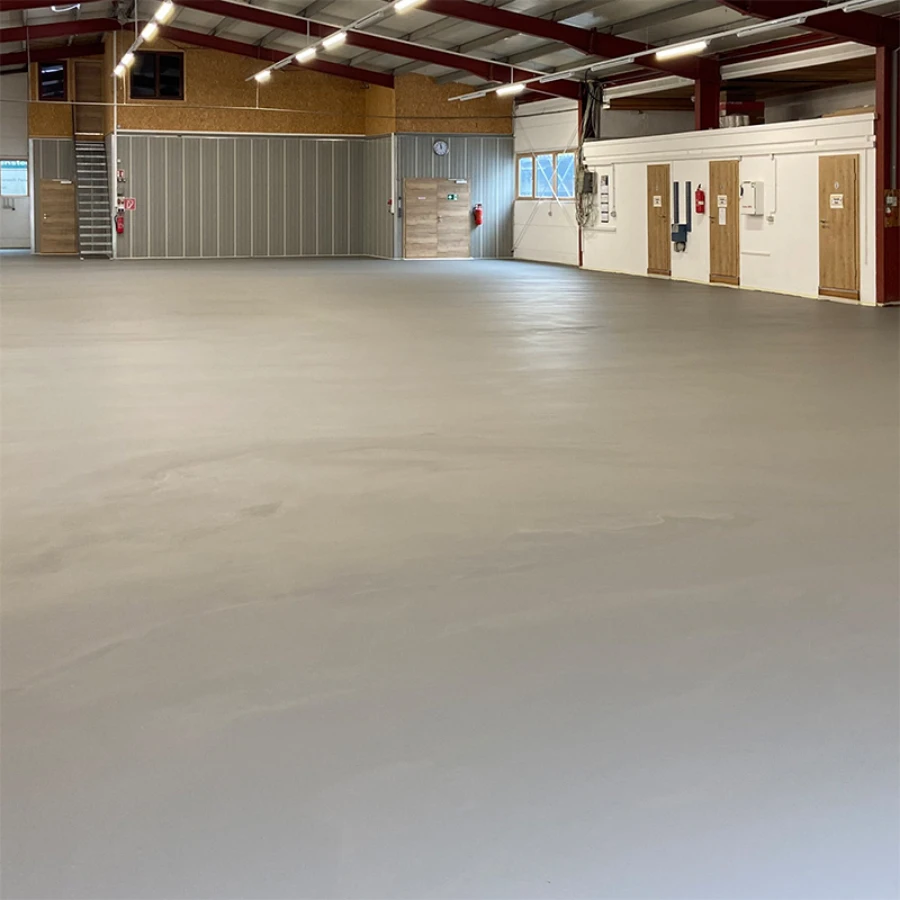
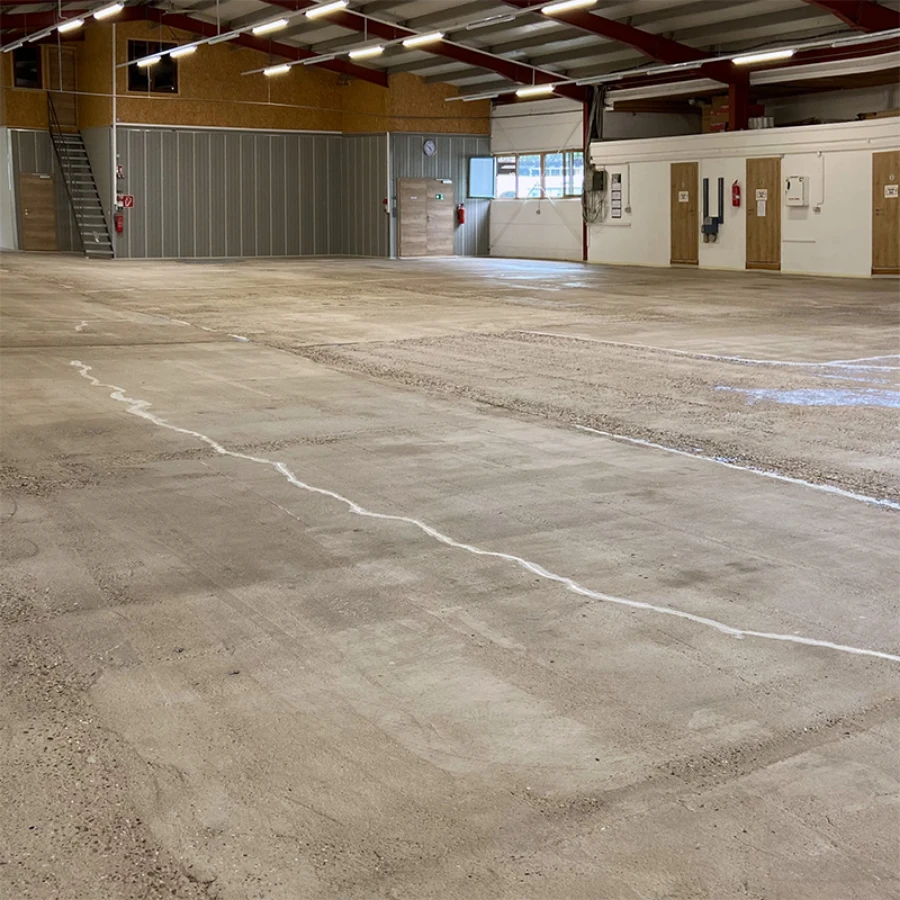
When old, worn-out floors with cracks, spalling, or unstable joints slow down operations, what’s needed is a renovation that’s technically well-planned and implemented quickly. The goal is a surface that reliably bears loads, permanently resolves problem areas, and avoids unnecessary downtime. You’ll receive a structured approach rather than “repairs based on gut feeling.”
Why Quantec?
Your Partner for Durable Industrial Floor Renovation
We don't see ourselves as merely a service provider, but as a reliable partner at your side. Every renovation is planned carefully and precisely, carried out using high-quality materials, and designed for long-term use. This results in cost-effective and durable solutions for your industrial floor.

Highly durable & resistant to point loads
Designed for heavy-duty use, forklift traffic, and peak loads.
Large-Scale Industrial Floor Remediation
Application of a cement-based industrial floor coating for warehouses, storage areas, and production areas.
Certified Systems (including WHG)
Suitable coating and sealing systems for specific requirements.
100% in-house work
Our own machinery—no subcontractors.
When the Soil Becomes a Production Risk
Typical triggers for industrial floor renovation include recurring damage to traffic routes and heavily loaded, high-traffic areas that has developed over the years. It often starts small—and ends with restricted-access areas, safety hazards, or increased maintenance costs. A floor that has seen better days can therefore become a problem.
Common Types of Damage
Common Types of Damage
- Cracks (from hairline cracks to structural cracks)
- Chipped areas, chipped edges, “soft” edges
- Delamination in stressed areas
- Chemical exposure (oils, cleaners, process media)
- Unstable joints and transitions resulting in damage in traffic lanes

Industrial Floor Remediation with a Clear Methodology
Quantec employs a renovation approach that technically assesses the current condition, clearly delineates renovation zones, and restores the surface to its target condition using an appropriate system. The result is a durable usable surface with defined properties—tailored to operational needs, traffic patterns, and cleaning routines.
From Damage Assessment to a Stable Foundation

Assessment

Blasting and grinding

Prime and sand

Coating complete
Service Modules in Industrial Floor Remediation
Repair of the Building's Structure
- Spot Repair (repair of specific damaged areas)
- Crack repair (from fine to large, using methods appropriate for the type of crack)
- Edge and transition area repair (hotspots, traffic lanes, gate areas)
Joints & Mechanical Protection
- Repair of Expansion and Formwork Joints (Priority Service to Prevent Damage)
- Structural Separation Joints (Repair to Restore Functionality)
- Re-creation of joints after pouring a new floor structure
Surface Systems (as required)
- EP/AC/PU-basedcoatings
- WHG Coatings (Systems for Specific Regulatory Requirements)
- Conductive/ESD versions (for sensitive areas)
- Slip resistance R9-R13 (as a property of the system selection)
- Sealing (surface stabilization)
- Impregnation (additional option, if appropriate)
- Floor markings (usually in combination with restoration/coating)
Cement-based industrial floor coating
Quantec uses tailored systems for floor restoration—depending on the load profile, time frame, and target parameters. In most cases, a so-called industrial floor coating is applied, which is pumped directly onto the surface. This allows us to renovate even large areas all at once and create a uniform, robust floor structure that delivers on its promises!
Industrial Floor Coatings
Coating of indoor concrete or cement screed floors subject to heavy mechanical stress, where high flatness standards are required.
Epoxy Resin (EP)
Durable enough to withstand high mechanical stress and capable of supporting repairs
Acrylic resin (AC)
Suitable for short downtime windows and quick restart
Polyurethane (PU)
recommended when elasticity or dynamic loads are technically relevant
Renovate large areas while continuing to use existing spaces
Industrial floors often need to be renovated while adjacent areas remain in use. For this reason, renovation projects are planned so that damaged or worn areas can be repaired without taking the entire site out of service. The goal is the cost-effective restoration of heavy-duty usable areas with as little disruption to ongoing operations as possible.
Typical Measures
Typical Measures
- Remediation of individual damaged areas or defined sub-areas
- Large-scale cement-based surface restoration on existing industrial floors
- Restoration of worn concrete surfaces and traffic areas
- Planning of the work in accordance with operational processes and usage requirements

Where Industrial Floor Remediation Is Particularly Often Required
Concrete floors with extensive wear and tear that require renovation
Industrial floors with chips, spalling, and damaged edges
Lanes and traffic areas subject to increased wear due to forklift traffic
Production and storage areas with localized damage or uneven surfaces
Floor areas where the load-bearing capacity, levelness, or surface quality must be restored
Quality That Proves Itself in Operation
Industrial floor rehabilitation is cost-effective only if the restored area remains usable over the long term and is suited to the actual operational demands of the facility. For this reason, the rehabilitation process focuses on restoring worn concrete surfaces, creating durable connections, and designing the floor to meet the specific needs of its intended use.
Typical Quality Factors
Large, uniform usable areas without disruptive transitions
System Selection Based on Load, Usage, and Wear Patterns
Restoration of Worn or Damaged Concrete Surfaces
Incorporating existing joints into the “new” floor to prevent cracking
Proper integration and prior repair of damaged areas in the existing industrial floor
Option for subsequent coating or functional treatment (e.g., WHG, ESD, or slip-resistant systems)
Quick Check & Goal Setting
You will work with us to clarify usage, loads, restricted hours, safety requirements, and priorities.
Renovation Plan with Phased Implementation
You will receive clear and detailed material and system recommendations, along with an implementation strategy that takes your operations into account.
Implementation & Approval
The work will be carried out, if possible, over the entire area or in sections, with clearly defined transitions to the healthy existing soil and efficient construction site logistics.
Before
Afterward
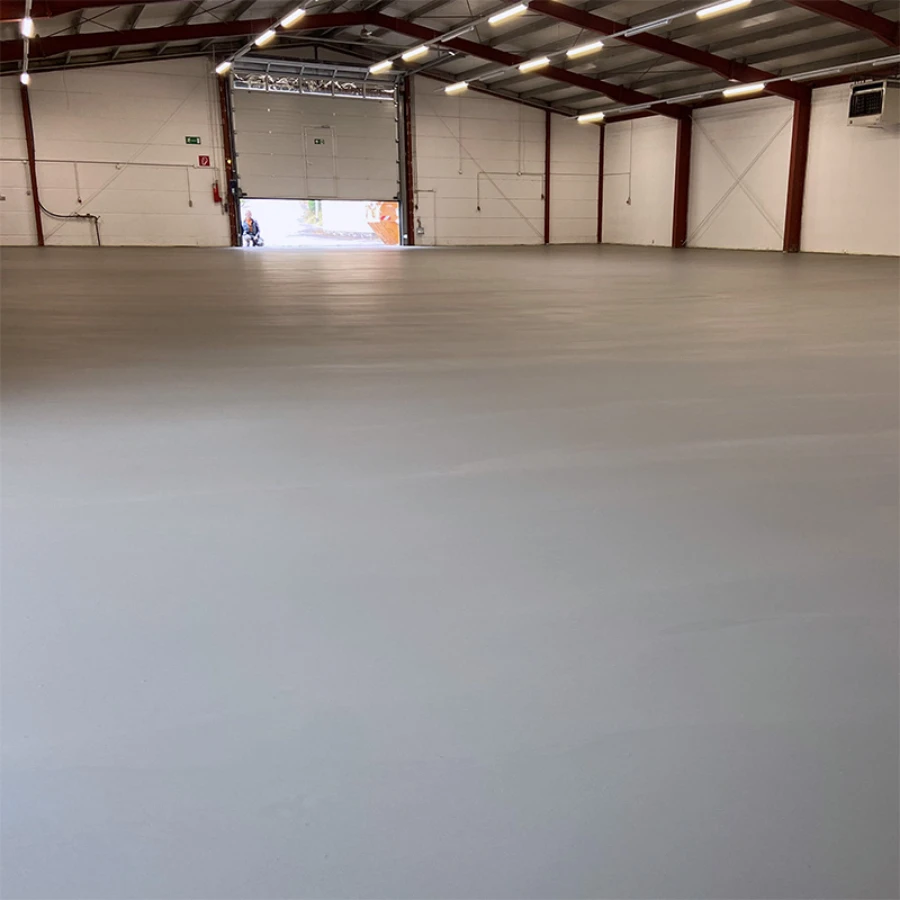
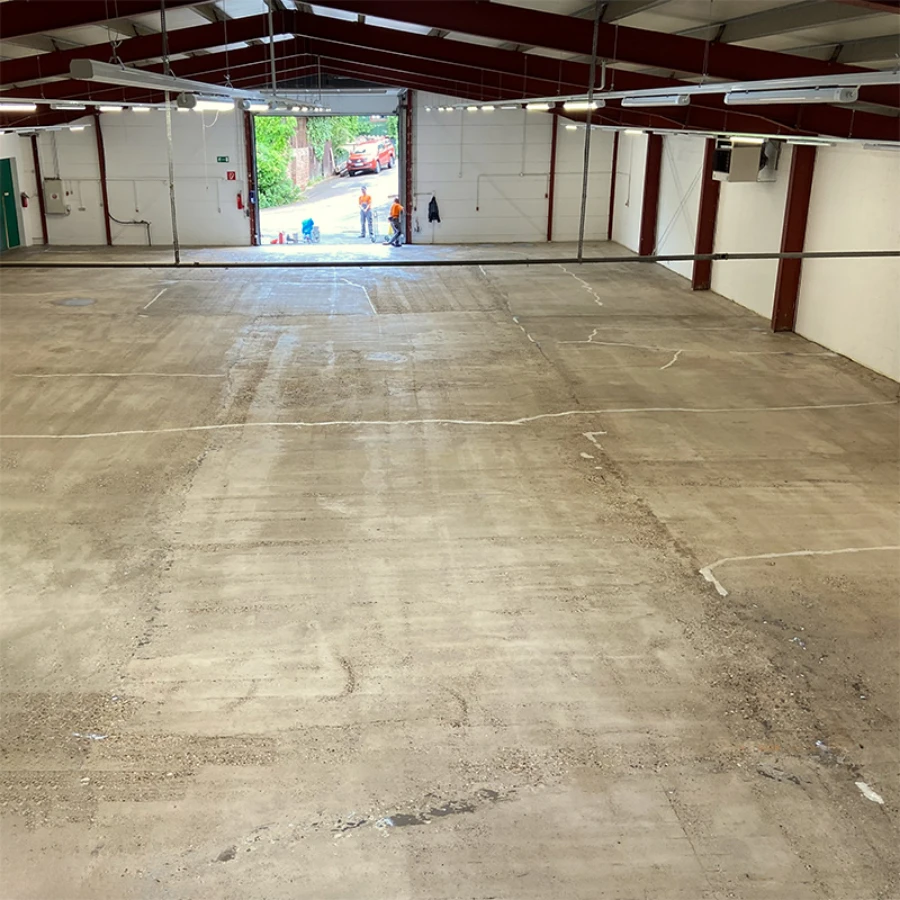
Manufacturing | Logistics | Commercial · Predictable downtime · Documentable systems · Expertise in large-scale operations
Types, Variants, and Technical Parameters of Industrial Floor Remediation
Epoxy Resin Repair (High-Performance Coating Systems)
This type of Industrial Floor Remediation uses rigid or tough epoxy resin systems, which are characterized by extreme mechanical abrasion resistance and high chemical resistance. This variant is the industry standard for production facilities in the mechanical engineering sector, where high wheel loads from industrial trucks and point loads from machine installations occur. Epoxy resins also allow for the integration of conductive layers to create ESD-protected areas in accordance with international standards.
| Performance Parameters | Specification / Value | Standard / Testing |
|---|---|---|
| Wheel Load Resistance | High (Vulkollan/hard rubber) | DIN EN 13892-4 (BCA) |
| Shore D hardness | 75 - 85 | DIN EN ISO 868 |
| Coating thickness | 2,0 - 5,0 mm | ISO 2808 |
PMMA Rapid Repair (Reaction Resin Systems)
Industrial Floor Remediation using acrylic resin (PMMA) is the technologically leading method for projects where minimizing downtime is a priority. Unlike epoxy resin-based systems, polymerization occurs within approximately 60 minutes, allowing the floor to withstand full mechanical loads immediately after the work is completed. This method is primarily used in logistics as well as in refrigerated and frozen storage facilities, as the chemical reaction proceeds reliably even at temperatures as low as -25 °C.
| Performance Parameters | Specification / Value | Standard / Testing |
|---|---|---|
| Curing time | 60-120 minutes | Internal Measurement Report |
| Compressive strength | > 75 N/mm² | DIN EN ISO 604 |
| Application Temperature Range | -25 °C to +35 °C | - |
| Adhesive Tensile Strength | > 1.5 N/mm² (concrete failure) | DIN EN 1542 |
| Chemical Resistance | Oils, Fats, Acids, Alkalis | DIN EN 13529 |
WHG-Compliant Remediation (Water Protection pursuant to § 62 AwSV)
Industrial Floor Remediation in areas subject to the Ordinance on Facilities for Handling Substances Hazardous to Water (AwSV) requires certified sealing systems. Quantec Industrial floors® GmbH carries out these renovations as a supervised specialist contractor, using crack-bridging laminate or self-leveling coatings. These systems must have a building authority approval from the DIBt and guarantee a defined containment function for 72 hours against specific media profiles (acids, alkalis, fuels).
| Repair Parameters | Specification / Value | Standard / Certification |
|---|---|---|
| Crack Bridging | Class R3 (up to 0.5 mm) | DIN EN 1062-7 |
| Media Resistance | Test Fluids 1-15 | DIBt Type Approval |
| Certification Status | Certified Contractor in Accordance with AwSV | § 62 AwSV |
| Leak Test | High-Voltage Testing / Spark Induction | Internal Quality Assurance Procedure |
High-Performance Cementitious Thin-Coat Restoration
This type of Industrial Floor Remediation is used when large-scale unevenness or deep wear on the concrete surface needs to be corrected without significant height build-up. Polymer-modified cement mortars (PCC) or high-strength self-leveling screeds are used, applied in layers of optimized thickness (approx. 4-15 mm). This method is ideally suited for restoring levelness in accordance with DIN 18202 in high-bay warehouses with automated guided vehicles (AGVs). However, it is also frequently used in warehouses and logistics areas to create a uniform floor surface.
| Process Parameters | Specification / Value | Standard / Testing |
|---|---|---|
| Flatness Tolerance | Line 3 or 4 | DIN 18202 |
| Flexural Tensile Strength | > 10 N/mm² | DIN EN 13892-2 |
| Wear resistance | Class A3 to A1.5 (Böhme) | DIN EN 13892-3 |
| Readiness for Documentation | after 24-48 hours | CM Measurement |
Industrial Floor Remediation
Industrial floor restoration involves the repair of worn, damaged, or mechanically stressed industrial floors. The goal is to restore surfaces that are durable and suitable for long-term use without having to completely replace the existing floor.
Quantec rehabilitates individual damaged areas as well as large-scale, worn-out, and aging concrete surfaces in warehouses, production areas, and logistics facilities. Depending on the nature of the damage, spalling, cracks, delamination, or worn surfaces are repaired, and existing usable areas are technically upgraded.
The focus is on restoring the structural integrity, improving surface quality, and ensuring the long-term usability of the industrial floor. If necessary, additional coating or protective systems—for example, to withstand increased chemical exposure or meet specific functional requirements—can be applied afterward.

FAQ


Logistics & Warehousing (aisles, high-bay racking, material handling, gate/ramp)
Production & Mechanical Engineering (Machine Installation Areas, Traffic Routes, Built-in Components)
Food & Hygiene (Cleaning, Moisture, Sealing Paths, Detail Zones)
Cold Storage & Temperature Changes (Gradients, Condensation, Curing Window)
Chemicals/Media & WHG/AwSV (Sealing/Retention Function, Media Profile, Documentation/Acceptance)
ESD & Special Functional Areas (Conductivity, Functional Integrity, Repair Paths)
Make Industrial Floor Remediation Planable Now
Please send us the key details—usage, area, nature of the damage, and time frame. You will receive a structured assessment and a recommendation for how to proceed.
The content of this page is intended to provide general information about Industrial Floor Remediation and does not constitute project-specific technical planning or a guarantee of specific properties. Since specific requirements and results depend on individual on-site conditions, no liability is assumed for the accuracy of this information.


INDUSTRIEBÖDEN ® GmbH

Your symptoms
The Quantec Solution
We will be happy to contact you.
Would you like a personal telephone consultation?