


You are here:
Polyurethane Coating - Durable Under Dynamic Use
Quantec Industrieböden® GmbH installs polyurethane (PU) coatings on existing industrial, logistics, and commercial floors—tailored to withstand heavy use, ensure user comfort, and provide seamless transitions between work and traffic areas.

When surfaces must withstand not only abrasion but also dynamic loads, the system’s elasticity becomes a critical property. In many cases, PU coatings are suitable for areas with varying loads, continuous use, and requirements for a surface that is highly functional in operation. Quantec implements PU systems for repairs to existing structures; the company does not perform new construction work involving concrete/screed or click-lock flooring.
Why Quantec?
Your Partner for Durable Industrial Floor Renovation
We don’t see ourselves merely as a service provider, but as a reliable partner at your side. Every renovation is planned carefully and precisely, carried out using high-quality materials, and designed for long-term use. This results in cost-effective and durable solutions for your industrial floor.

Suitable for dynamic loads
PU systems for applications with varying loads and operating cycles.
Focus on Comfort and Finishes
The surface is designed for ease of use, traction, and ease of cleaning.
Thorough training in the finer details
Transitions and peripheral areas are structurally integrated in a stable manner.
100% in-house work
Our own machinery—no subcontractors.
If the load is not “static”
In many facilities, loads are not distributed evenly: varying traffic patterns, impact loads, vibration, and continuous use characterize everyday floor conditions. In such scenarios, a PU coating can be a practical solution if the system design is tailored to dynamic conditions, operational requirements, and maintenance needs.
Typical application scenarios
Typical application scenarios
- Significant variations in usage throughout the day (traffic / process zones)
- Areas where surface comfort and operational usability are important
- Recurring wear and tear at transition areas, without chemicals or the Water Resources Act ( WHG ) being the primary concern
- Areas that must not only be “hard” but also functional in operation
- Need for balanced traction and cleanability

PU Coating as a Functional Wear Layer in Existing Structures
Quantec implements PU systems as a coordinated construction process: preparing the existing surface, stabilizing edge zones, ensuring clean transitions, and configuring the surface so that it functions reliably during operation. The goal is a wear course that better accommodates dynamic stress than purely “hard” standard constructions.
Polyurethane coatings are solvent-free, elastic, non-shrinking, and suitable for functional surfaces that accommodate movement. They are ideal for areas where, in addition to abrasion resistance, surface comfort, lightfastness, and a surface that is practical for operational use are required. Depending on the design , smooth, easy-to-clean, slip-resistant, or electrically conductive surfaces can be created.
A technical advantage of PU systems is that they can also be applied over mastic asphalt. At the same time, they are well-suited for selected industrial and commercial areas with requirements for ease of cleaning, comfort, and elastic behavior. However, they are not always the first choice for areas subject to very highcontinuous mechanicalstress or extreme point loads.
From Damage Assessment to a Stable Foundation

Assessment

Primer

Mid-shift

Apply a layer of PU

Textured surface

Completed Ramp
Services Related to Polyurethane Coatings
Existing Structure Repairs Prior to PU
- Localized Repair in Areas of Spalling and Hotspots
- Crack repair when crack edges destabilize the usable surface
- Integration of areas near joints and transitions to prevent secondary damage
Before the actual polyurethane coating is applied , the existing surface is prepared so that edge zones, transitions, and damaged areas can permanently support the subsequent wear layer.
PU Systems as a Wear Layer
- System design tailored to usage, dynamics, and abrasion
- Surface configuration optimized for traction and ease of cleaning
- Implementation in sections with defined transition zones
PU coatings form elastic wear layers that are both water-resistant and resistant to many cleaning agents as well as selected oils and operating fluids. Depending on the formulation , slip-resistant, electrically conductive , or smooth, easy-to-clean surfaces can be achieved. Colored and light-resistant versions are also available.
Detailed Training and Interfaces
- Structural stabilization of edge zones and transitions
- Combination with expansion joint rehabilitation when movement is a factor
- Optional mechanical protection using heavy-duty profiles in joint areas
Especially with elastic floor systems, the proper integration of detail zones is crucial to ensure that the surface remains functional and durable during operation.
What Factors Determine PU Design
PU is the best choice when usage and surface function are the primary considerations. Therefore, dynamic and operational parameters are key factors in the planning process.
Relevant Parameters (Selection)
Usage
Traffic volume, varying load patterns, process areas
Abrasion
Rolling Load, Travel Lanes, Point Load Clusters
Surface
Desired traction, tactile feel, ease of cleaning
Surroundings
Temperature and Operating Conditions, Cleaning
Detail Zones
Transitions, Edge Areas, Areas Near Joints
Time window
Restricted Hours, Subareas, Section Authorization
Application Temperature
from about 10 °C
Processing time
about 15 to 50 minutes
Curing / Walkability
about 15 to 36 hours
Chemical Resistance
about 2 to 3 days
PU Projects with Meaningful Segmentation
PU coatings can be applied in sections if traffic routes and work zones are to remain usable. The segmentation follows operational logic and prioritizes hotspots so that the measure has an immediate impact on daily life.
Building Blocks of Implementation
Building Blocks of Implementation
- Segmentation by Traffic Axes and Process Zones
- Defined transitions between developed and used areas
- Off-peak scheduling for high-traffic periods
- Approvals by section with clear construction site and safety protocols

Typical Applications for PU Coatings
Industrial sites with varying traffic and process zones
Areas where surface comfort and operational safety are important
Zones with continuous operation where transitions must remain stable
Work areas with requirements for traction and cleaning
Renovations of existing buildings where the functional surface is the primary focus
Properties of a PU (polyurethane) Coating
A PU coating for industrial floors is particularly useful when a flexible floor coating is needed that can better absorb dynamic stress than rigid systems. Polyurethane floor coatings are suitable for areas with varying load patterns, continuous use, and requirements for a comfortable industrial floor.
Typical properties of a polyurethane coating include elasticity, deformability, light resistance, and shrinkage-free curing. As a result, PU is particularly well-suited for applications where dynamic loads, vibration, or the need to accommodate movement must be taken into account. In this context, a PU surface can also be designed to bridge cracks in a functional sense, provided that the substrate, system structure, and detail areas are properly coordinated.
In addition, it is possible to create smooth, cleaning-resistant, slip-resistant, or electrically conductive surfaces. Another advantage is the ability to apply PU coatings to mastic asphalt as well. Typical applications include commercial spaces, select industrial and food-processing areas, commercial kitchens, and zones with requirements for cleanability and surface comfort.
This makes the PU coating particularly suitable for industrial floors when, in addition to abrasion resistance, elasticity, comfort of use, and a surface that is practical for operational use are required.
4 Steps to Installing a PU Wear Layer in an Existing Building
PU Check
Usage, surface area, cleaning, and time slots are recorded.
Specify the system architecture
The design and surface configuration are defined to suit the dynamics and intended use.
Prepare Inventory
Damaged areas, edges, cracks, and joints are stabilized.
Coat and Release
Implementation to be carried out in-house, followed by phased approval.
Before
Afterward
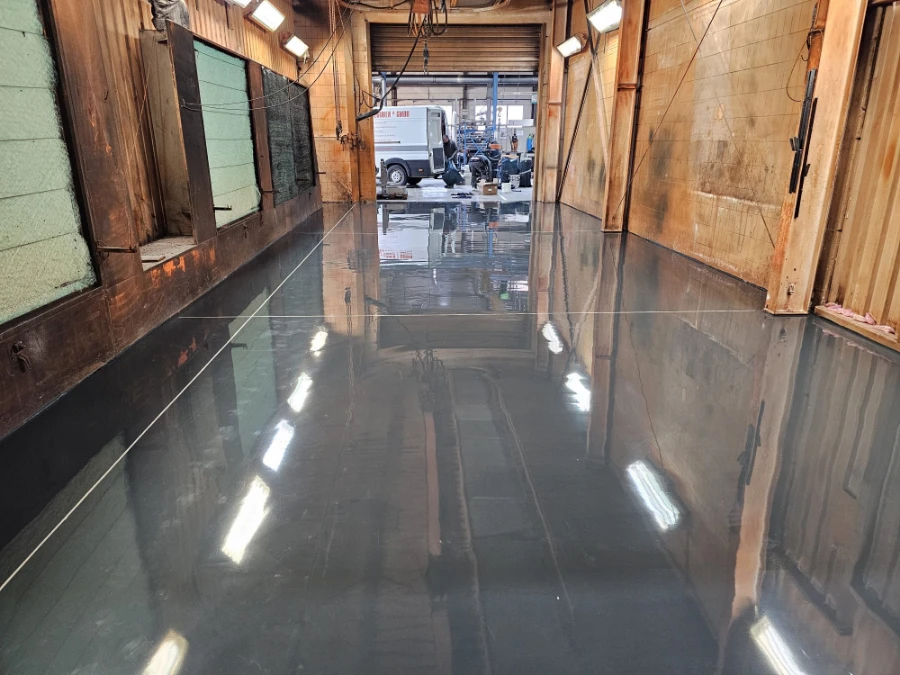
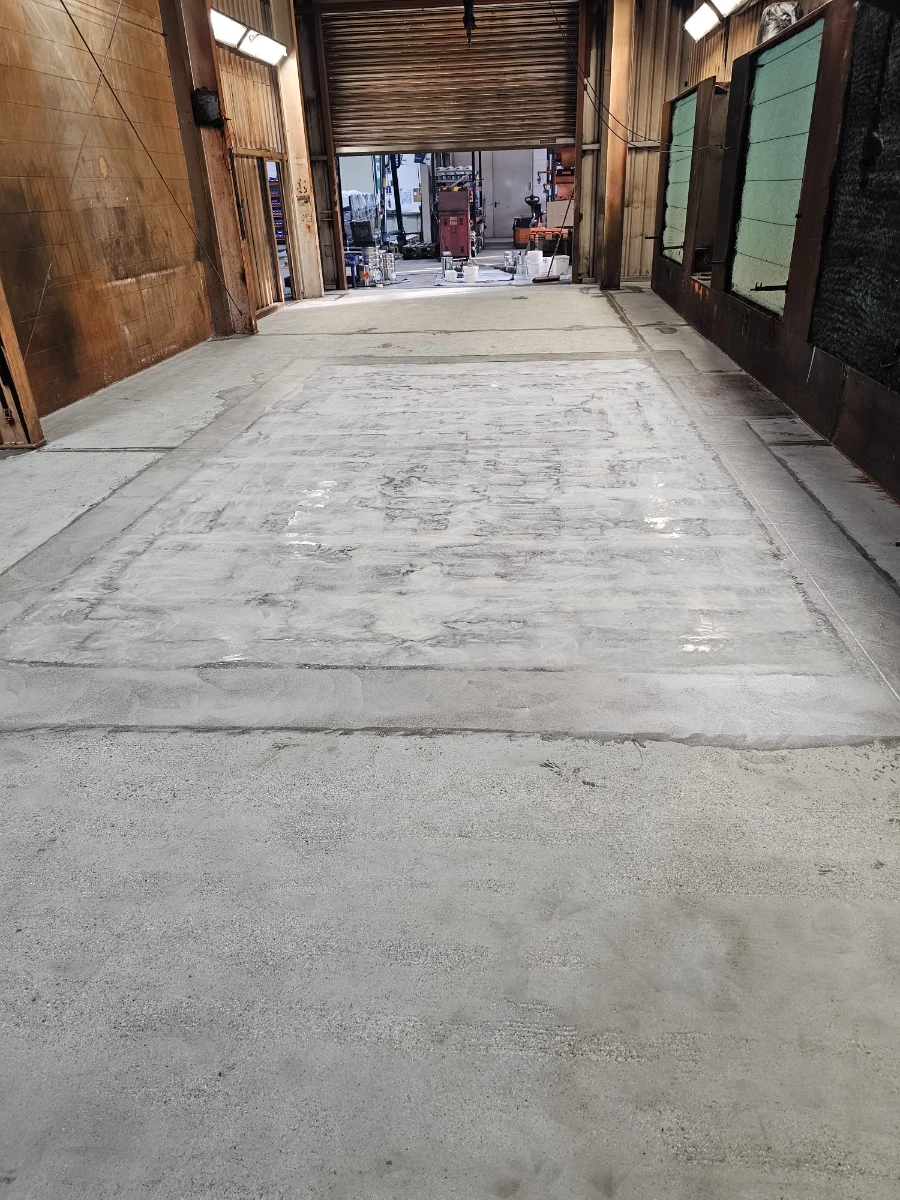
Dynamic Use · Surface Comfort · Stable Transitions · Predictable Access
Types and Varieties of Polyurethane Coatings
Polyurethane cement (PU cement) for high thermal and chemical resistance
| Operating Principle | Cement-bonded PU systems offer high resistance to thermal cycling and certain chemical stresses (depending on the medium) while maintaining high mechanical load-bearing capacity |
| Delimitation | A different system character than traditional PU finishes, The surface is designed for its intended use and cleaning requirements |
| Typical Uses | Washing/Cleaning Zones, Process areas with temperature fluctuations, heavily used production areas |
| Interpretation criterion | Industry-specific field | Decision relevance |
|---|---|---|
| System Thickness | 6-12 mm | Robustness and Load Reserves |
| temperature change | relevant | Design Based on Process Reality |
| Media contact | depends on the operation | Consistency Only Through Media Profile |
| Mechanical load | high | Suitable for heavy use |
| Surface image | possible in a structured way | Traction in Wet Areas |
| Background/Details | critical | Create clean transitions |
PU Discharge Capable (ESD) as a PU System Integration
| Operating Principle | The conductive design is integrated into the PU structure, to combine functionality and surface requirements |
| Delimitation | Interfaces and transitions to standard areas are critical to functionality, Abrasion zones must be taken into account |
| Typical Uses | ESD Work Areas, defined paths, Areas with Functional Requirements and Development Pressure |
| Interpretation criterion | Industry-specific field | Decision relevance |
|---|---|---|
| Zoning | ESD Zones | Clear Boundaries/Transitions |
| Abrasion/Traffic | low-medium | Functional stability |
| Cleaning | defined | Keep the surface level |
| Interfaces | Grounding/Discharge Path | Integration on a project-by-project basis |
| Surface structure | fine | Traction vs. Care |
| Approval Logic | zonal | Implementation Without a Complete Shutdown |
PU spreading system for improved traction in high-risk areas
| Operating Principle | Texture is created by sprinkling, Sealing controls pore closure and care behavior |
| Delimitation | more structured than a timeline, reasonable, when traction in certain areas is more important than maximum ease of cleaning |
| Typical Uses | Walkways and traffic routes subject to moisture and dirt, Ramps, Bottlenecks |
| Interpretation criterion | Industry-specific field | Decision relevance |
|---|---|---|
| System Thickness | 3,0-6,0 mm | Structural load-bearing capacity |
| Degree of structure | zonable | Minimize Maintenance Effort |
| Entry Profile | Moisture/Dirt | Determine Traction Requirements |
| Traffic volume | medium-high | Impact/Shear Forces |
| Transition Zones | critical | No “edge” at the zone boundary |
| Approval Logic | step by step | Operational Safety During the Transition |
Thin PU coating for function-oriented standard zones
| Delimitation | small layer cross-section, Therefore, high standards for inventory quality, Not suitable for “rehabilitation through thickness” |
| Operating Principle | A thin PU coating serving as a solid wear layer with a specific surface function |
| Typical Uses | Ancillary areas, moderate traffic zones, Areas with a focus on cleanability |
| Interpretation criterion | Industry-specific field | Decision relevance |
|---|---|---|
| Total thickness | 0,5-1,2 mm | Substrate Quality Is Crucial |
| Dynamic Loading | low-medium | Suitable for moderate traffic |
| Surface image | smooth to slightly textured | Focus on the Nursing Process |
| Scratch and Scratch Mark Performance | usage-based | Evaluate Traffic Profile |
| Detail Zones | Transitions/Border | Local preparatory work is required |
| Release Planning | in sections | Operating window adjustable |
PU elastic / crack-bridging for dynamic micro-movements
| Operating Principle | A more flexible PU structure can better withstand micro-movements and dynamic stress (depending on the system) |
| Delimitation | Not a substitute for structural repairs of spalls/hotspots, Preliminary work remains mandatory |
| Typical Uses | Areas with varying loads, areas subject to vibration, Transitions Subject to Dynamic Loads |
| Interpretation criterion | Industry-specific field | Decision relevance |
|---|---|---|
| Level of elasticity | system-dependent | Selecting Functions Based on Use |
| Crack Bridging | low to moderate | relevant for microcracks |
| Abrasion Profile | medium | Configure the interface accordingly |
| Cleaning | defined | Maintain stable surface properties |
| Detail Zones | highly critical | Secure Edges/Transitions in Advance |
| Section Approval | possible | Operating window available |
Self-leveling PU coating for uniform wear layers
| Operating Principle | Self-leveling PU coating creates a defined wear layer with an adjustable surface finish |
| Delimitation | more uniform than spreader systems, Traction is adjusted via the surface/top layer |
| Typical Uses | Production Zones, Mounting surfaces, Areas Requiring Regular Cleaning |
| Interpretation criterion | Industry-specific field | Decision relevance |
|---|---|---|
| Wear layer thickness | 2,0-4,5 mm | Reserve and Functional Stability |
| Surface option | smooth to finely textured | Traction vs. Cleaning |
| Traffic Profile | medium | Consider the thrust/impact component |
| Cleaning Logic | wet/dry | determines the surface configuration |
| Transitions | defined | Prevents edge chipping |
| Restricted Time Window | medium | Process and Approval Steps |
Polyurethane (PU) Coating
A polyurethane coating is chosen when, in addition to mechanical stress, dynamic load cycles or specific surface functions are key considerations. Often, it is not the square meters of floor area but rather the zones at transitions, fixtures, and edge areas that determine service life and comfort under traffic. Quantec Industrieböden® GmbH implements PU systems for the restoration of existing industrial floors and designs the specific variants based on traffic patterns, cleaning regimens, and functional requirements. For areas subject to heavy loads or thermally/chemically demanding conditions, various system types within the PU family can be considered.

FAQ


Logistics & Warehousing
Manufacturing & Mechanical Engineering
Food & Hygiene
Cold Storage & Temperature Fluctuations
Chemistry/Media & WHG/AwSV
ESD & Special-Purpose Functional Surfaces
Request a Quote for Polyurethane Coating—Functional for Your Business
Please send us usage data, cleaning routines, and time windows. You will receive a structured assessment of the PU finish in your existing flooring.
The content of this page is intended to provide general information about Polyurethane coating and does not constitute project-specific technical planning or a guarantee of specific properties. Since specific requirements and results depend on individual on-site conditions, no liability is assumed for the accuracy of this information.


INDUSTRIEBÖDEN ® GmbH

Your symptoms
The Quantec Solution
We will be happy to contact you.
Would you like a personal telephone consultation?