


You are here:
Repairing Expansion Joints - Stable Joints, Heavy-Duty Industrial Floors
Quantec Industrieböden® GmbH handles expansion joint rehabilitation in industrial, logistics, and commercial spaces—with a focus on load-bearing joint edges, defined movement absorption, and permanently stable transitions.
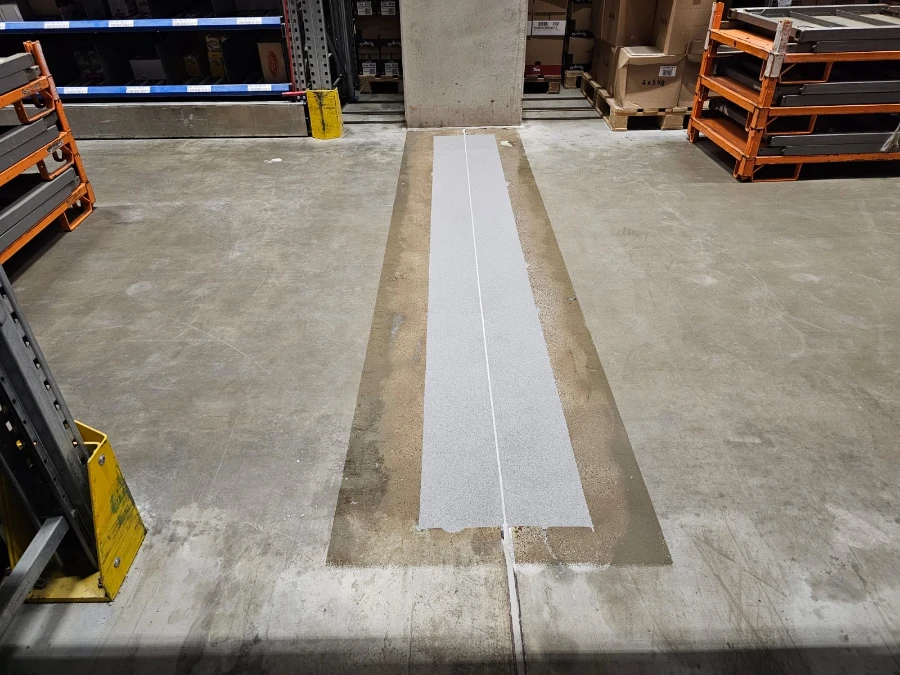
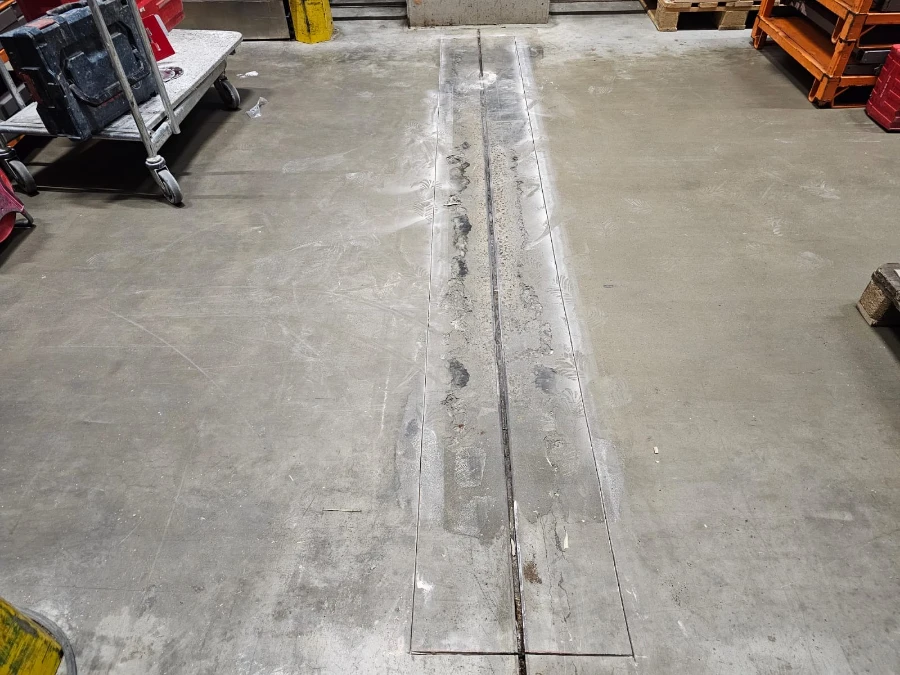
Damaged expansion joints are one of the most common causes of edge spalling, potholes in traffic lanes, and recurring repairs. Professional joint rehabilitation reduces consequential damage, stabilizes edge areas, and makes roadways usable in a predictable manner. The work can be carried out in sections, even with limited closure times of just a few hours.
Why Quantec?
10-Year Warranty
We don’t see ourselves as merely a service provider, but as a reliable partner by your side. For us, quality isn’t just a promise—it’s a commitment: That’s why we offer a 10-year warranty on damage repairs and on our expansion joints—for long-lasting solutions you can count on.

Featured Service: Expansion Joints
High annual output and well-established processes for joint areas.
Sturdy Joint Edges & Transitions
Reduces edge chipping in traffic lanes and hotspots thanks to a special material
Renovation in Stages
Zone-based access control—suitable for ongoing operations.
In-house production using our own machinery
End-to-end execution without subcontractors.
Joint Inspection
(Usage + Damage Assessment)
(Usage + Damage Assessment)
They identify usage patterns, problem areas, and signs of damage. The goal is to establish clear priorities: which joints to address first and which transitions are critical.
Renovation Plan + Phase Planning
You will receive implementation guidelines for joint edges, profiles/transitions, and joint sealing—tailored to your operating hours and closure periods.
Do-It-Yourself Installation + Approval
The work is carried out using our own equipment and following defined procedures. Once completed, the joint area is once again passable and safe for use.
Before
Afterward
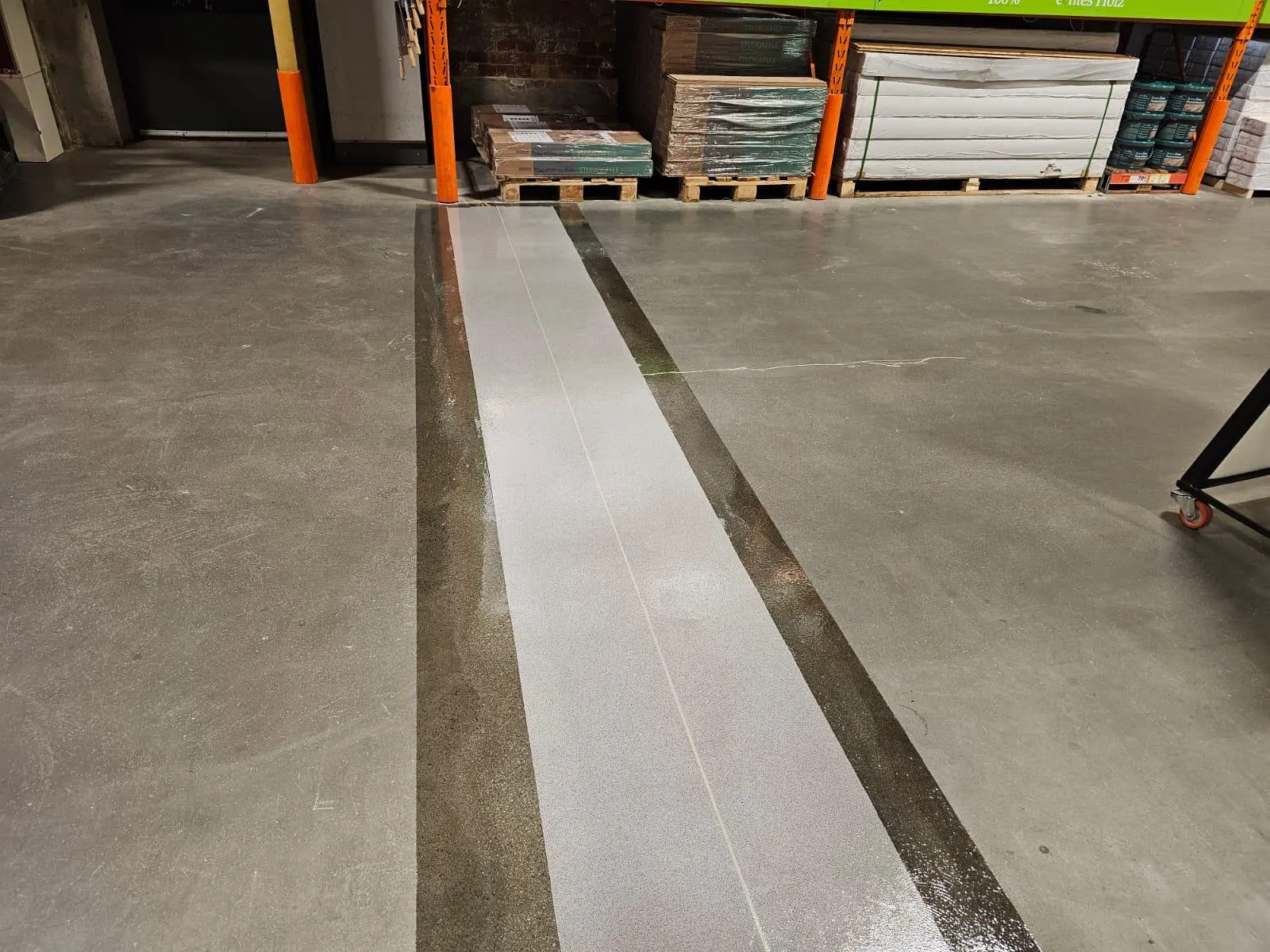
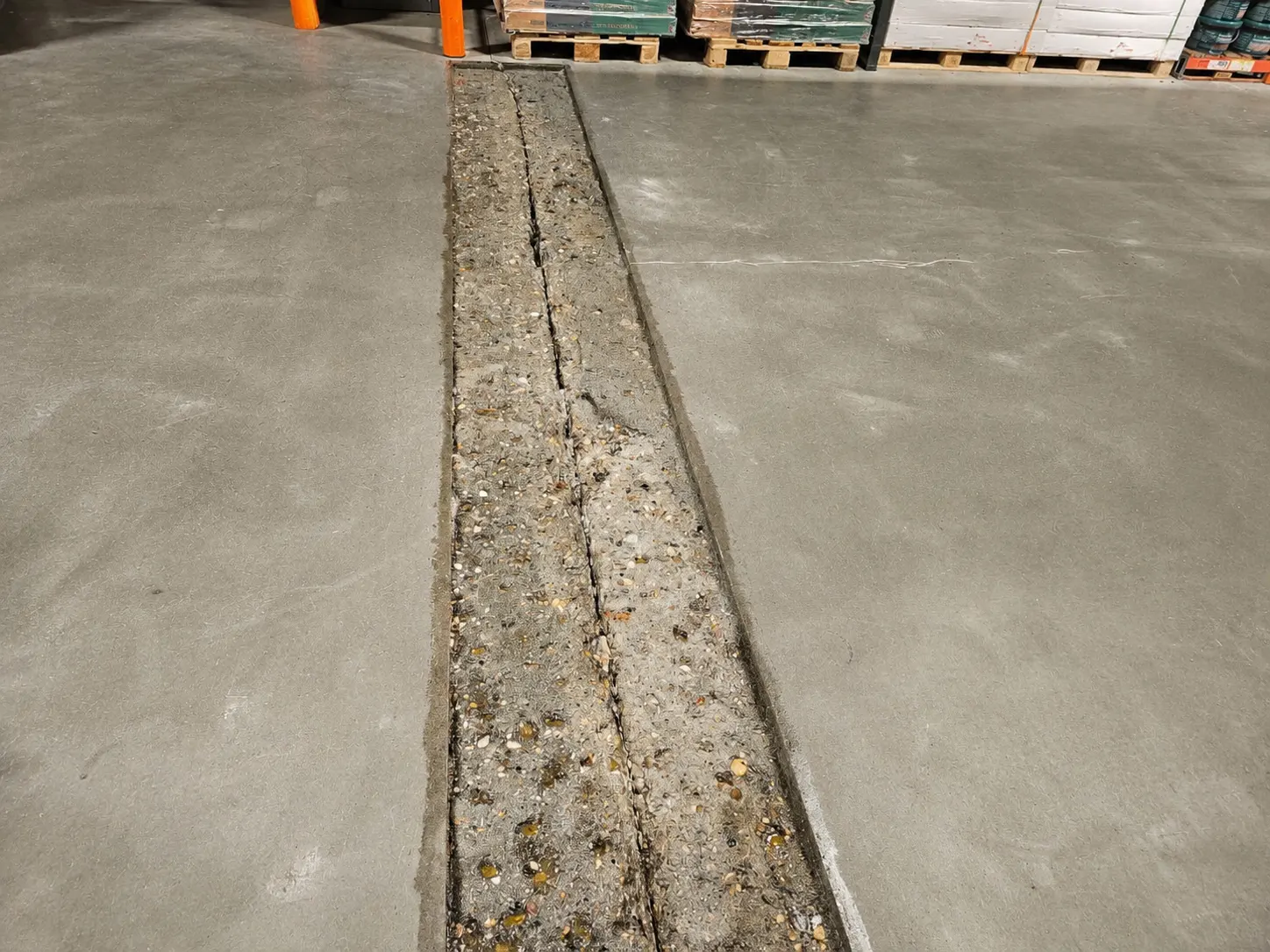
Why Expansion Joints So Often Cause Secondary Damage
Expansion joints are structurally necessary—but during operation, they become weak points when joint flanks spall off, profiles fail, or the joint area gives way under load. This causes impact and shear forces to be transmitted to the adjacent edge zones. The result is spalling, cracks, and recurring repairs along traffic routes, which disrupt operations.
Typical symptoms in practice
Typical symptoms in practice
- Edge spalling along joints, especially in traffic lanes
- Spalling at transitions, ramps, and gate areas
- Unstable and worn joint fillings with abrasion and washouts
- “Rattling”/knocking when driving over due to height differences
- Recurring repair areas that break open again at the edges

Expansion Joint Rehabilitation with Defined Movement Absorption
Quantec rehabilitates expansion joints in such a way that the joint fulfills its function and the adjacent areas remain permanently stable. Key factors include load-bearing joint flanks, a structure suitable for the intended use, and clean transitions to coatings and repaired areas.
From Damage Assessment to a Stable Foundation

Assessment

Joint area chiseled out

Joint Rebuilt
Services Related to Expansion Joints
Joint Repair
- Restoration of Load-Bearing Joint Flanks and Edge Zones
- Repair of joint edges in high-traffic areas
- Renovation of damaged expansion joints in industrial floor areas
Mechanical Protection and Drive-Over Capability
- Installation of appropriate joint profiles in heavy-duty and high-traffic areas
- Transition solutions for forklift traffic and recurring peak loads
- Minimizing height differences and impact stress at crossings
Links to Further Work
- Combination with pavement rehabilitation in traffic lanes and high-traffic areas
- Integration with coatings (EP/AC/PU), including defined detailing
- Additionally: Heavy-duty profiles at critical edges/transitions
What Determines Shelf Life
Joint repair is considered durable when it takes actual operational loads into account—and is not merely made to appear “visually seamless.” Critical areas typically include edges, traffic zones, and areas subject to point loads.
Quality Factors That Matter in Business Operations
Load Profile
Forklifts, pallet jacks, shunting traffic, point load zones
Exercise
Joint Movement Components, Temperature and Vibration Effects
Geometry
Joint width, joint edge condition, adjacent edge zone
Transitions
Ramps, gate areas, traffic lanes, transitions to other surfaces
Cleaning
Cleaning regimen and abrasive stress (e.g., dirt and sand content)
Repairing joints without completely closing off traffic routes
Joint areas can often be rehabilitated in sections if zones are planned according to traffic patterns. This allows main routes to remain open while hotspots are repaired in a targeted manner.
Typical Procedure
Typical Procedure
- Zoning Based on Traffic Routes and Crossings
- Defined crossings for forklift traffic
- Renovation during night and weekend windows for critical areas
- Section-by-section approval with clear construction site and safety protocols
From Damage Assessment to a Stable Foundation

Document the damage

Prepare the joint area

Joint repaired
Typical Applications for Expansion Joint Repair
Traffic Lanes in Warehousing and Logistics Areas
Doorways, ramps, and passageways between areas of the hall
Production areas with recurring load peaks
Areas subject to high impact stress from vehicle traffic
Areas where joint edges regularly chip away
What Determines Shelf Life
Much of the damage to expansion joints does not occur within the joint itself, but rather in the adjacent edge zone. That is why the focus is on stabilizing the joint flanks and transitions—so that repairs do not have to be repeated at short intervals.
Relevant Factors
Sturdy edges instead of crumbly joint edges
Specified drive-over capacity without impact stress
Clean interfaces with coatings and repair areas
Robust design suited to the load profile
Manufacturing | Logistics | Commercial · Stabilize joint edges · Reduce consequential damage · Predictable approval
Types and Varieties of Expansion Joints for Industrial and Commercial Floors
Dissipative expansion joint (ESD/EPA environment)
| Design feature | Industry-Specific Area | Technical Significance | Typical Design |
|---|---|---|---|
| Zone Boundary | ESD ↔ Standard | Functional Continuity | Defined transitions, appropriate grout solution |
| Traffic/Wear and Tear | low to medium | Functional stability | abrasion-resistant design |
| Cleaning | variable | Surface Properties | Care and Material Selection Tailored to Your Needs |
| Interfaces | Grounding/Discharge Path | System Integration | Project-specific integration |
Construction joint (construction section joint) in existing buildings - renovation of the joint
| Design feature | Industry-Specific Area | Technical Significance | Typical Renovation Option |
|---|---|---|---|
| Joint Offset | 0-5 mm (existing) | Ride Comfort/Bump Absorption | Leveling + Edge Repair |
| Edge quality | intact to broken out | Service Life of the Joint | Resurfacing with EP/AC Mortar |
| Dust/Dirt Requirements | low to high | Cleaning Effort | Sealing or Filling |
| Traffic | Pallet Trucks up to Heavy-Duty | Peak Shock Load Level | Profile retrofitting in hotspots, if necessary |
| Release Time | time-window-dependent | Operation | AC/MMA for short windows, EP for longer ones |
Expansion joint as a structural joint (Construction Joints in the floor area)
Operating Principle: Separation of two building structures or sections; accommodation of multidimensional relative movements; at ground level, often with drive-over cover or profile structures and defined waterproofing.
Distinction: Unlike a dummy joint, a structural joint is designed to accommodate movement and must not be “rigidly” bridged.
Typical Applications: Joints in production and logistics facilities, transitions between construction sections, ramps and gate lines.
Distinction: Unlike a dummy joint, a structural joint is designed to accommodate movement and must not be “rigidly” bridged.
Typical Applications: Joints in production and logistics facilities, transitions between construction sections, ramps and gate lines.
| Design feature | Industry-specific field | Technical Significance | Typical Renovation/Repair Options |
|---|---|---|---|
| Joint Opening (Operational) | 20-80 mm | Movement Reserve and Cover Selection | Profile/Covering Systems, Flexible Sealing, Flank Protection |
| Direction of Movement | 1-3 axes | determines the profile geometry and bearing arrangement | Sliding cover, defined connections |
| Crossing Level | 0-2 mm offset (target) | reduces impact loads and edge chipping | Leveling in Peripheral Areas, Profile Retrofitting |
| Mode of Transportation | Pedestrian traffic to heavy-duty traffic | affects edge reinforcement | Heavy-duty profiles / Edge reinforcement |
| Sealing Requirement | dust- and liquid-resistant to airtight | Depending on usage/media | PU waterproofing, system-based installation to meet requirements |
Expansion joint close to chemicals/WHG (media-resistant joint design)
| Design feature | Industry-Specific Area | Technical Significance | Typical system orientation |
|---|---|---|---|
| Media contact | from cleaning-related to process-related | Material selection | PU/special sealant, systemic integration |
| Exposure time | short to upright | Risk of infiltration | Sealed, flank-protected design |
| Cleaning Chemicals | variable | Surface/Sealant Stability | tailored durability |
| Detailed Connections | critical | Seal Integrity Check | Defined transitions/connections |
Expansion joints with an elastic joint seal (elastically sealed movement joint)
Principle of Operation: An elastic sealant bridges the joint opening and accommodates movement through its elasticity and adhesive flanks.
Distinction: Significantly higher movement absorption compared to semi-rigid joint fillers, but more susceptible to edge chipping under high wheel loads without flank protection.
Typical Applications: Transitions and separation points requiring movement, dust and dirt management, and localized liquid ingress.
| Design feature | Industry-Specific Area | Relevance to Operations | Typical system material |
|---|---|---|---|
| Joint width | 10-40 mm | Holding Edge + Motion Reserve | PU sealant |
| Permissible Joint Movement | ±10-25 % (typical) | Crack Resistance/Adhesion | PU (elastic) |
| Sealant Hardness | Shore A 25-45 | Ride Comfort vs. Wear | PU (depending on the design) |
| Secondary Liability | Mineral/Inventory | decides on infiltration | Primer + PU, prepared on the side |
| Temperature range | approx. −20 to +60 °C | seasonal change in length | PU |
| Chemical contact | close to cleaning to close to oil/media | Material selection required | PU/special resistance (if required) |
| Release Time | 12-48 h (typically) | Downtime Planning | depending on climate/coating thickness |
Joint edge restoration (joint edge reprofiling with reactive resin mortar)
| Особенность конструкции | Типичная для данной отрасли сфера деятельности | Техническое значение | Типичный материал системы |
|---|---|---|---|
| Ширина повреждения на каждом фланге | от 20 до 60 мм | определяет объем фрезерования, резки и выемки | Раствор EP или раствор AC/PMMA |
| Прочность на сжатие | 60-90 МПа (типичное значение) | Несущая способность в зоне колесной нагрузки | Раствор EP/AC |
| Целевой показатель удержания (по состоянию на текущий момент) | ≥ 1,5-2,0 МПа | Подземное соединение | грунтовка, зависящая от системы |
| Радиус кромки/геометрия | определено | Снижение ударной нагрузки | |
| Время разрешения | 1-2 ч (AC/MMA) / 8-24 ч (EP) | Планирование простоев | AC/PMMA для коротких временных интервалов |
Edge joint / connection joint (decoupling to walls, supports, installation parts)
| Design feature | Industry-Specific Area | Technical Significance | Typical Repair |
|---|---|---|---|
| Joint width | 5-20 mm | Decoupling Margin | Elastic seal or Kompriband/insert + edge seal |
| Type of Movement | small, multidirectional | Forced Stress Relief | deformable solution |
| Media/Cleaning Entry | possible | Prevent Infiltration | Sealed design, if required |
| Mechanical Stress | mostly low | Secondary edge protection | local edge reprofiling |
Simulated joint / Saw cut (contraction joint in existing slabs)
Operating Principle: Design crack cross-section for controlled cracking; the joint “works” primarily by opening and closing in response to shrinkage and temperature changes.
Distinction: Unlike a structural joint, it is not designed as a continuous separation between two structural elements, but rather as a crack-control measure in slab fields.
Typical use: Large areas in warehousing and logistics facilities; traffic lanes with high traffic frequency.
Distinction: Unlike a structural joint, it is not designed as a continuous separation between two structural elements, but rather as a crack-control measure in slab fields.
Typical use: Large areas in warehousing and logistics facilities; traffic lanes with high traffic frequency.
| Design feature | Industry-Specific Area | Technical Significance | Typical Renovation/Repair Options |
|---|---|---|---|
| Cut/Joint Width | 3-10 mm | determines the choice of filler | semi-rigid filler or elastic sealant (depending on use) |
| Joint Depth (Existing) | 20-60 mm | Edge Stability/Dirt Accumulation | Cleaning + Filling, and, if necessary, Flank Repair |
| Proportion of physical activity | low to moderate | Opening hours vary by season and load | Filler with limited elasticity |
| Edge Stress | high in lanes | Primary Failure Mode | Joint Edge Repair + Semi-Rigid Filling |
| Cleaning/Input Profile | dry to wet | affects pollution | Sealed design, if required |
Fast-curing expansion joint restoration (short blocking time)
| Design feature | Industry-Specific Area | Technical Significance | Typical System Materials |
|---|---|---|---|
| Time window | 2-8 h | determines the choice of system | AC/MMA mortar, fast-setting filler |
| Release Target | Foot/Transport/Heavy-Duty | Usage Levels | phased release |
| Hotspot Coverage | local to zonal | Stability After Release | Edges + Filling Combined |
| Transitional Training | defined | Avoiding Sharp Edges | Tread Pattern/Sidewall Protection |
Heavy-duty joint / armored joint (reinforced joint with steel profiles for wheel load)
| Design feature | Industry-Specific Area | Technical Significance | Typical Design |
|---|---|---|---|
| Profile Material | Steel (high-strength) | Edge Armor | Heavy-duty profiles / reinforced systems |
| Joint Opening | 20-60 mm | Movement/Crossing Zone | system-dependent geometry |
| Traffic volume | moderate to very high | Impact Load Dominance | Profile + Integration on the Sides |
| Load Transfer Principle | profile-guided / system-integrated | reduces edge impact | Depending on the system, with load transfer |
| Retrofittability in Existing Buildings | yes, zonal | Minimizing Downtime | Phased Implementation |
Semi-rigid joint filling (edge stabilization for overrun joints)
| Design feature | Industry-Specific Area | Technical Significance | Typical system material |
|---|---|---|---|
| Joint width | 3-12 mm | Filler Stability | EP/PU-based semi-rigid filling (depending on the design) |
| Motion Capture | ±2-10 % | Suitable for low levels of activity | semi-rigid |
| Hardness | Shore A 70-95 / Shore D 30-60 | Edge support | semi-rigid |
| Abrasion/Wheel Load Behavior | high | fewer edge breaks | in combination with flank preparation |
| Release Time | 4-24 h (typical) | Restricted Time Window | depending on the system/temperature |
Expansion Joints for Industrial and Commercial Floors
Expansion joints for industrial and commercial floors are functionally critical movement and separation points in existing floor surfaces that must accommodate load cycles, thermal expansion, settlement, and structural movement in a controlled manner.
In logistics, production, workshop, and transshipment areas , most damage occurs at the edges of expansion joints, transitions, and drive-over points, because wheel loads and shear forces are concentrated there. Quantec Industrieböden® GmbH treats these joints in existing facilities using renovation and repair methods based on epoxy resin, acrylic resin, and polyurethane systems, and typically structures the measures by zone according to operating windows and traffic patterns.
Expansion joints are classified in planning guidelines, among other things, as distinct joint types and must be protected against height misalignment and edge stress.

FAQ


Logistics, High-Bay Storage, Material Handling
Manufacturing, Mechanical Engineering, Material Handling
Food, Cold Storage, Clean Room
Chemistry, WHG, Media Contact, ESD
Automotive suppliers, metalworking
Workshops, recycling facilities, raw material storage areas, traffic areas
Logistics & Warehousing: Design and Load Profiles
Production & Manufacturing: Media Resistance and Special Requirements
Maintenance, Renovation, and Operation: Value Preservation and Repair Methods
Logistics & Warehousing: Design and Load Profiles
Production & Manufacturing: Media Resistance and Special Requirements
Maintenance, Renovation, and Operation: Value Preservation and Repair Methods
Repairing Expansion Joints—With a Predictable Approval Process
Please send us key data on usage, damage patterns, and downtime. You will receive a structured assessment and a proposal for implementation.
The content of this page is intended to provide general information about Expansion joints and does not constitute project-specific technical planning or a guarantee of specific properties. Since specific requirements and results depend on individual on-site conditions, no liability is assumed for the accuracy of this information.


INDUSTRIEBÖDEN ® GmbH

Your symptoms
The Quantec Solution
We will be happy to contact you.
Would you like a personal telephone consultation?