


You are here:
ESD Flooring - Conductive Coating for Sensitive Areas
Quantec Industrieböden® GmbH installs conductive (ESD) flooring as a coating system in existing facilities—tailored to the intended use, floor structure, and technical grounding concept in industrial, logistics, and commercial areas.
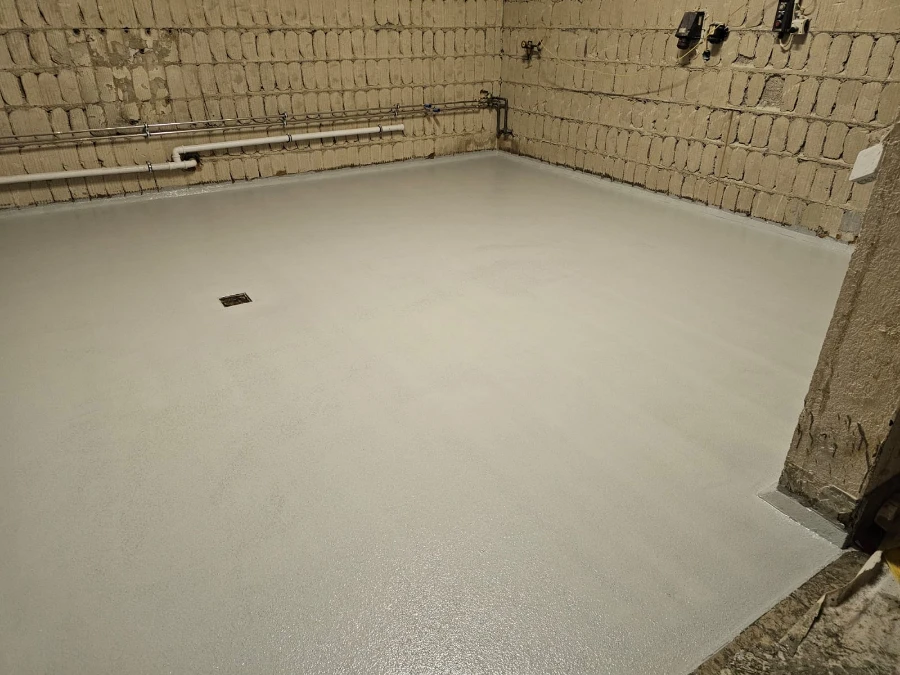
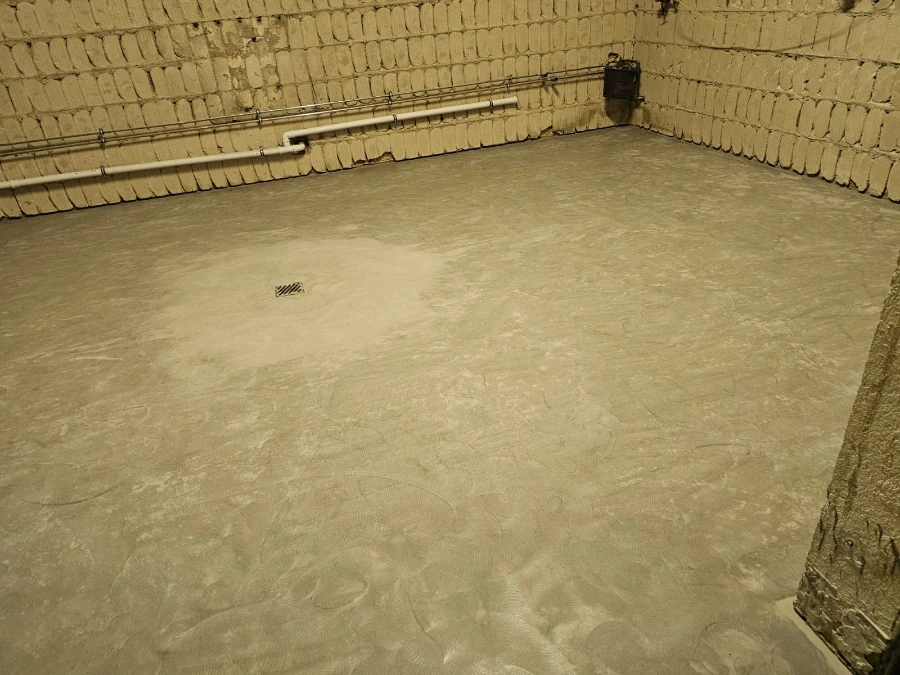
Where electrostatic discharge affects components, processes, or safety, the floor must meet defined discharge parameters. An ESD floor is not just a “standard industrial floor with added features,” but rather a system comprising the subfloor, conductive components, and proper integration into the overall design. The goal is a durable surface that functions reliably during operation—including stable edge zones, transitions, and a certifiable approval process.
Why Quantec?
Your Partner for Durable Industrial Floor Renovation
We don’t see ourselves as merely a service provider, but as a reliable partner at your side. Every renovation is planned carefully and precisely, carried out using high-quality materials, and designed for long-term use. This results in cost-effective and durable solutions for your industrial floor.

Conductivity as a Holistic System
The design, components, and integration are planned collaboratively.
Built to withstand the rigors of everyday industrial use
Designed to withstand traffic, wear, and cleaning during operation.
Scheduled Closure Times
Implementation in sub-areas with defined approval.
100% in-house work
Our own machinery—no subcontractors.
Why “antistatic” Does Not Automatically Mean ESD-Compliant
In practice, these terms are often confused: “antistatic” refers to reducing static charge, whereas an ESD floor must enable defined dissipation and remain consistently reproducible over time. It is crucial that dissipative properties do not merely exist on paper but remain stable during operation despite abrasion, cleaning, and foot traffic.
Typical applications for ESDcoatings
Typical applications for ESDcoatings
- sensitive electronics/assembly areas, testing and packaging zones
- Areas with defined EPA requirements
- Retrofitting during process changes or for new equipment
- Replacement/modernization when existing surfaces no longer provide stable discharge
- Combination of ESD and high mechanical stress (e.g., logistics in sensitive areas)

Conductive flooring as a coordinated system design
Quantec implements ESD flooring as a comprehensive system: an appropriate coating structure, conductive components, and a technically sound integration into the grounding system. In doing so, edge zones, transitions, and hotspots are designed so that the surface not only “fits” initially but also remains stable after use and cleaning.
Typical Project Workflow

Primed

Scraper and copper strips

Conductive layer applied

Coating applied

Completely covered

Sealed area
Services for ESD Flooring / Conductive Coatings
Inventory Valuation and Preparation
- Inspection of the existing surface for load-bearing capacity and the need for rehabilitation
- Localized repairs in problem areas (spalling, flaking, edge zones)
- Crack and joint repair or structural modification, if necessary
ESD System Design (EP/AC/PU-based, depending on requirements)
- System design as a conductive wear layer with a defined function
- Surface configuration suited to abrasion and cleaning
- Design based on intended use: traffic, point loads, process operations
Interfaces and Integration
- Planning Critical Details: Transitions, Edge Zones, Connections
- Integration into the drainage concept
- Provision of structured guidelines for operation, cleaning, and future maintenance
Which Parameters Determine ESD Flooring in Practice
An ESD floor must meet technical requirements while also being durable in operation. For this reason, the requirements are not considered in isolation but are evaluated in conjunction with usage and maintenance.
Relevant Planning Parameters
Scope of Use
EPA Zones, Assembly/Testing, Logistics in Sensitive Environments
Wear and Traffic
Forklifts/Pallet Trucks, Roller Loads, Point Loads
Cleaning
Interval, Mechanics, Cleaning Chemicals
Detail Zones
Transitions, baseboard areas, areas near joints
Operation
Environmental Conditions, Process Requirements
Approval
Restricted Hours, Subareas, Section Logic
Retrofit ESD flooring without unnecessarily interrupting processes
ESD areas are often functionally critical. Their implementation can be organized into sub-areas to maintain controlled transitions and enable predictable approvals.
Building Blocks for Implementation
Building Blocks for Implementation
- Segmentation by process zones and traffic routes
- Defined transitions between processed and used areas
- Work during off-peak hours for sensitive operations
- Clear safety and construction site protocols, coordinated with operations
Typical Applications for Conductive Flooring
Electronics Assembly, Testing, and Packaging Zones
Manufacturing areas with sensitive components
Storage/Picking Areas Within EPA Structures
Plant environments where electrical discharges cause process disruptions
Retrofit Projects for Layout or Process Changes
Request an ESD Floor—With a Focus on Integration and Operation
Please send us the area, intended use, and boundary conditions. You will receive a structured assessment of the conductive design options for your existing building.
ESD Check (Area + Use)
They specify the area of use, operating conditions, and target requirements for the area.
System Architecture and Integration
You will receive a recommendation regarding the setup and integration into the discharge plan.
Stabilize the inventory
Damaged areas, edge zones, cracks, and joints are prepared to ensure the system functions reliably over the long term.
Completion and Handover
Implementation by the customer, followed by approval as defined and instructions regarding cleaning and operation.
Before
Afterward
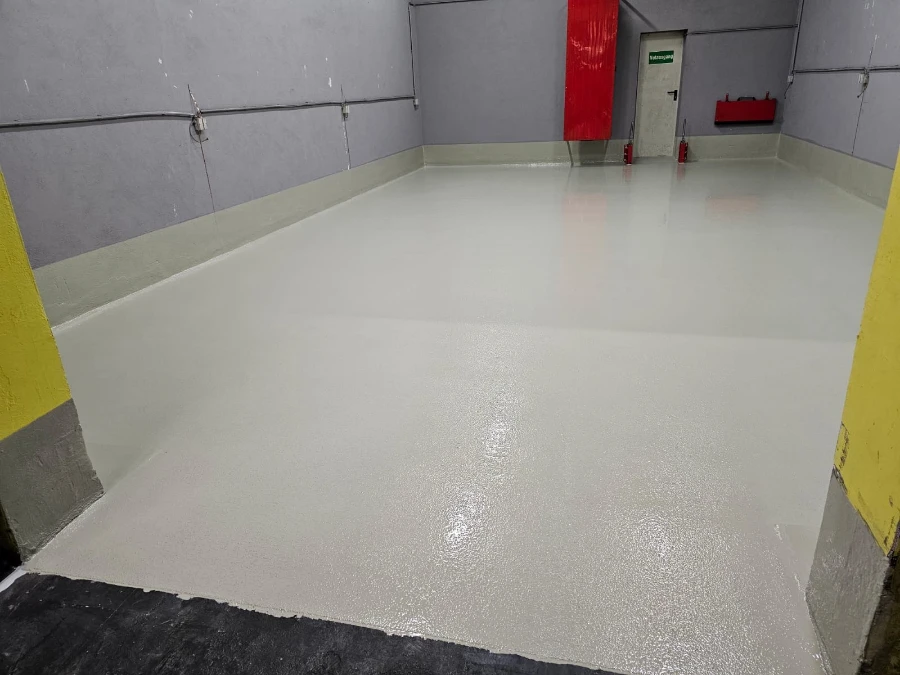
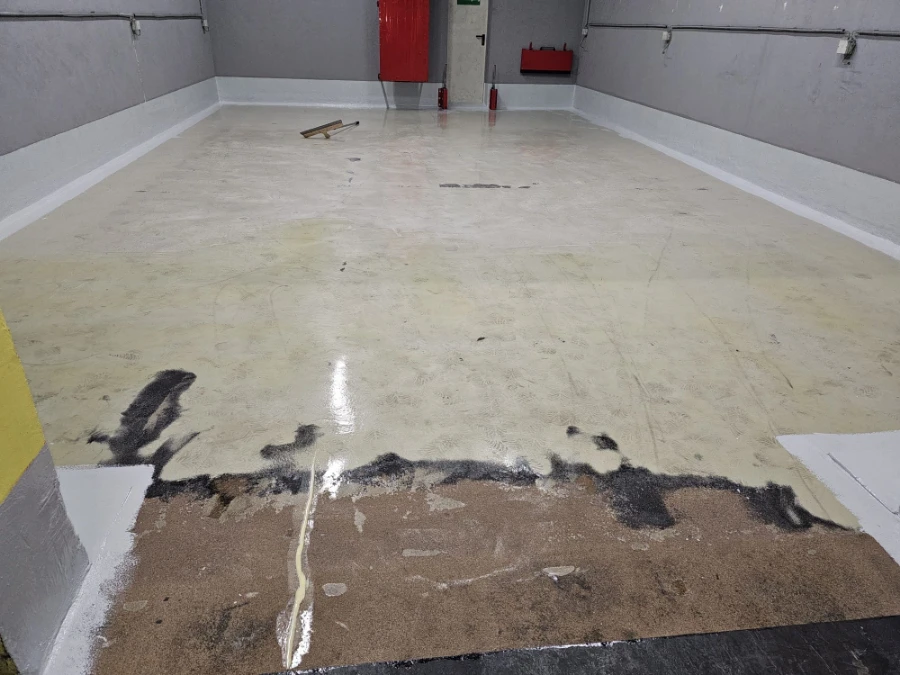
ESD/EPA Areas · Discharge Capability · Surface Resistance · Defined Interfaces
Types and Varieties of Conductive Flooring (ESD Flooring)
ESD flooring as a footwear-flooring system (system qualification instead of “just flooring”)
| Operating Principle | The electrostatic protection performance is evaluated as a combination of flooring + footwear + person; results apply only to the tested combination. |
| Delimitation | A floor can be Rg/Rtt-compliant without the footwear-floor system reliably limiting the desired body charge during operation; for this reason, many programs also take system performance into account. |
| Typical Uses | Mass Production/Electronics Assembly with the EPA Program, Quality-Assured ESD Areas, Audits of ESD Programs |
| Design Parameters | Industry-specific field | Relevance to Standards and Practice |
|---|---|---|
| Test Principle | Footwear/Flooring + Person | IEC 61340-4-5 (IEC Webstore) |
| Validity | Only tested combinations | explicit normal logic |
| Boundary Logic Relative to Earth | < 1×10⁹ Ω (Flooring to Ground) | Frequent program request |
| Documentation | Measurement Reports/Verification Plan | Auditability and Reproducibility |
| Operational Impact | Contamination, Cleaning Films | can change system settings |
| Zoning | EPA vs. Non-EPA | Interface Management (Transitions) |
ESD-conductive epoxy resin system (EP) for very low resistance requirements
| Operating Principle | The EP structure is designed so that the electrical resistance falls within the “conductive” range; current paths are optimized more for low resistance. |
| Delimitation | Conductive is not “better,” but rather a different target class; in some environments, too low a resistance may be undesirable (interface/process specifications). |
| Typical Uses | Special areas with defined discharge requirements, Subareas within an EPA with a narrow specification |
| Design Parameters | Industry-specific field | Relevance to Standards and Practice |
|---|---|---|
| ESD Class | conductive (≤10⁶ Ω) | Classification of “conductive” according to standard ESD classes |
| Rg Target | < 1×10⁹ Ω (S20.20-compliant), often significantly lower | Boundary Logic Relative to Ground Remains Critical |
| Grounding Concept | Defined derivation points/network | The derivation path must be reproducible during operation |
| Transitions to Non-ESD | to plan meticulously | Avoid Service Interruptions and “Islands” |
| Abrasion Zone (Forklifts/Walkways) | critical | Ensuring Operational Stability Along Major Transportation Corridors |
| Acceptance Test | Rg/Rtt per 61340-4-1 | Comparability and Documentation |
ESD Epoxy Resin Coating (EP) for EPA Surfaces
| Operating Principle | An EP system with conductive/dissipative components provides a defined level of dissipation; dissipation paths are established through the system's design and grounding. |
| Delimitation | Dissipative systems typically operate above the “conductive” threshold and are the standard design in many EPA applications, unless very low resistance is required. |
| Typical Uses | Electronics Assembly, Test/Measurement Zones, ESD Storage Areas, Defined ESD routes within logistics areas |
| Design Parameters | Industry-specific field | Relevance to Standards and Practice |
|---|---|---|
| ESD Class | dissipative (typically >10⁶ to <10⁹ Ω) | Classification as “dissipative” according to standard ESD classes |
| Resistance to Ground (Rg) | Target: < 1×10⁹ Ω | S20.20-/61340-5-1-Near-threshold logic for Flooring-to-Ground |
| Measurement Method: Soil Resistivity | Rg / Rtt (Point-to-Point) | IEC/DIN EN 61340-4-1 Test Methodology |
| Layer Structure | Primer + Conductive Layer + Topcoat | Leakage Path Stability Across System Layers |
| Wear/Traffic Profile | low-medium (can be zoned) | Abrasion affects surface and functional stability |
| Cleaning regimen | defined (averages/intervals) | Contamination or film formation can cause measurement values to shift |
ESD Quartz Scatter System (EP) for Increased Wear and Traction Requirements
| Operating Principle | The ESD-compatible EP structure is mechanically reinforced with mineral fillers; the surface is adjusted to better control abrasion and shear forces. |
| Delimitation | Compared to smooth ESD surfaces, robustness increases, while cleanability and susceptibility to contamination change due to the structure. |
| Typical Uses | Transportation Corridors Near the EPA, Zones with changes in direction, Transitions Between Assembly and Logistics |
| Design Parameters | Industry-specific field | Relevance to Standards and Practice |
|---|---|---|
| Surface structure | fine to medium (zoned) | Traction vs. Cleanability as a Conflict of Objectives |
| Functional stability | Depending on the topcoat/sealant | Surface Affects Measurement Results and Maintenance |
| Traffic Profile | medium-high (forklift axles) | Focus on mechanical design |
| Rg/Rtt Decrease | according to 61340-4-1 | The metrics remain Rg/Rtt |
| Transition Edges | Flush/Chamfered Details | Reduce sharp edges, mitigate wear hotspots |
| Definition of Cleaning | mandatory | Structure Requires Coordinated Cleaning Processes |
ESD repairs and zonal retrofitting in existing facilities (hotspots, pathways, specific areas)
| Operating Principle | ESD functionality will be restored or retrofitted in specific areas (e.g., walkways, workstations, passageways), including electrically defined connection and grounding points. |
| Delimitation | Not “new” across the entire surface, but rather focused on critical areas; key considerations here are the transitions to existing Coatings and the reproducibility of the measured values after the repair. |
| Typical Uses | Areas of wear along walkways, in-plant modifications, and ESD zones in mixed-use production areas. |
| Design Parameters | Industry-specific field | Relevance to Standards and Practice |
|---|---|---|
| Magnitude of the intervention | local to zonal | Operations can continue on a section-by-section basis |
| Transition from ESD to Non-ESD | defined | Avoid service interruptions |
| Repeat measurement | Rg/Rtt per 61340-4-1 | Comparability Before and After the Measure |
| Grounding Points | project-related | The ground path must be closed |
| Surface Restoration | flat/low-porosity | Resistance to Wear and Cleaning |
| Cleaning Approval | voted | The nursing process is part of functional stability |
Polyurethane ESD Coating (PU-ESD) for Dynamic Loading
| Operating Principle | PU-based ESD systems combine conductivity with more elastic material properties (depending on the system), which can offer advantages in dynamic zones. |
| Delimitation | Compared to EP, the surface is subjected to different stresses (e.g., scratch and scuff resistance); specifications and test areas are crucial in practice. |
| Typical Uses | Walkways and areas subject to dynamic loads, Transition zones with varying loads within an EPA |
| Design Parameters | Industry-specific field | Relevance to Standards and Practice |
|---|---|---|
| ESD Target Class | dissipative or conductive (depending on the system) | Set a target using Rg/Rtt |
| Measurement/Acceptance | 61340-4-1 (Rg/Rtt) | Standardized Resistance Measurement |
| Footwear-Surface System Test | 61340-4-5 (if required) | The protection rating applies to this specific combination |
| Dynamic Zone | moderate (varying workload) | Selection of Materials Based on Use/Traffic |
| Care/Cleaning | defined | Film formation can influence flow paths |
| Edge and Joint Areas | to ensure structural integrity | Functional and Wear Hotspots in the Fleet |
Conductive flooring (ESD flooring)
A conductive floor (ESD floor) is a functional system design for areas where electrostatic charges must be dissipated in a controlled manner (EPA/ESD protection zones, electronics assembly, test areas, order picking involving ESDS components). From a technical standpoint, the coating is not the only critical factor; the grounding concept, measurement and acceptance parameters (e.g., resistance to ground, point-to-point), and the interaction with footwear during operation are also crucial.
Test and measurement methods for floor resistance are described, among other places, in IEC/DIN EN 61340-4-1; the evaluation of the protective effect of a footwear-floor system is carried out, among other things, in accordance with IEC 61340-4-5. (VDE Verlag)
Quantec Industrieböden® GmbH implements conductive coating and repair systems in existing facilities using EP, PU, and AC technologies, integrating edge zones, transitions, joint areas, and phased approvals in ongoing operational environments.

FAQ


Logistics & Warehousing
Manufacturing & Mechanical Engineering
Food & Hygiene
Chemistry/Media & WHG/AwSV
Cold Storage & Temperature Fluctuations
ESD & Special-Purpose Functional Surfaces
Request an ESD Floor—With a Focus on Integration and Operations
Please send us the area, intended use, and boundary conditions. You will receive a structured assessment of the conductive design of the existing structure.
The content of this page is intended to provide general information about Conductive coating and does not constitute project-specific technical planning or a guarantee of specific properties. Since specific requirements and results depend on individual on-site conditions, no liability is assumed for the accuracy of this information.


INDUSTRIEBÖDEN ® GmbH

Your symptoms
The Quantec Solution
We will be happy to contact you.
Would you like a personal telephone consultation?