


You are here:
Chemical-Resistant Industrial Flooring - Resistance by Medium and Application
Quantec Industrieböden® GmbH installs chemical-resistant industrial flooring in existing facilities —as a multi-layer system using EP,AC, or PU, designed to withstand contact with various substances, exposure time, cleaning, and your specific operational needs.

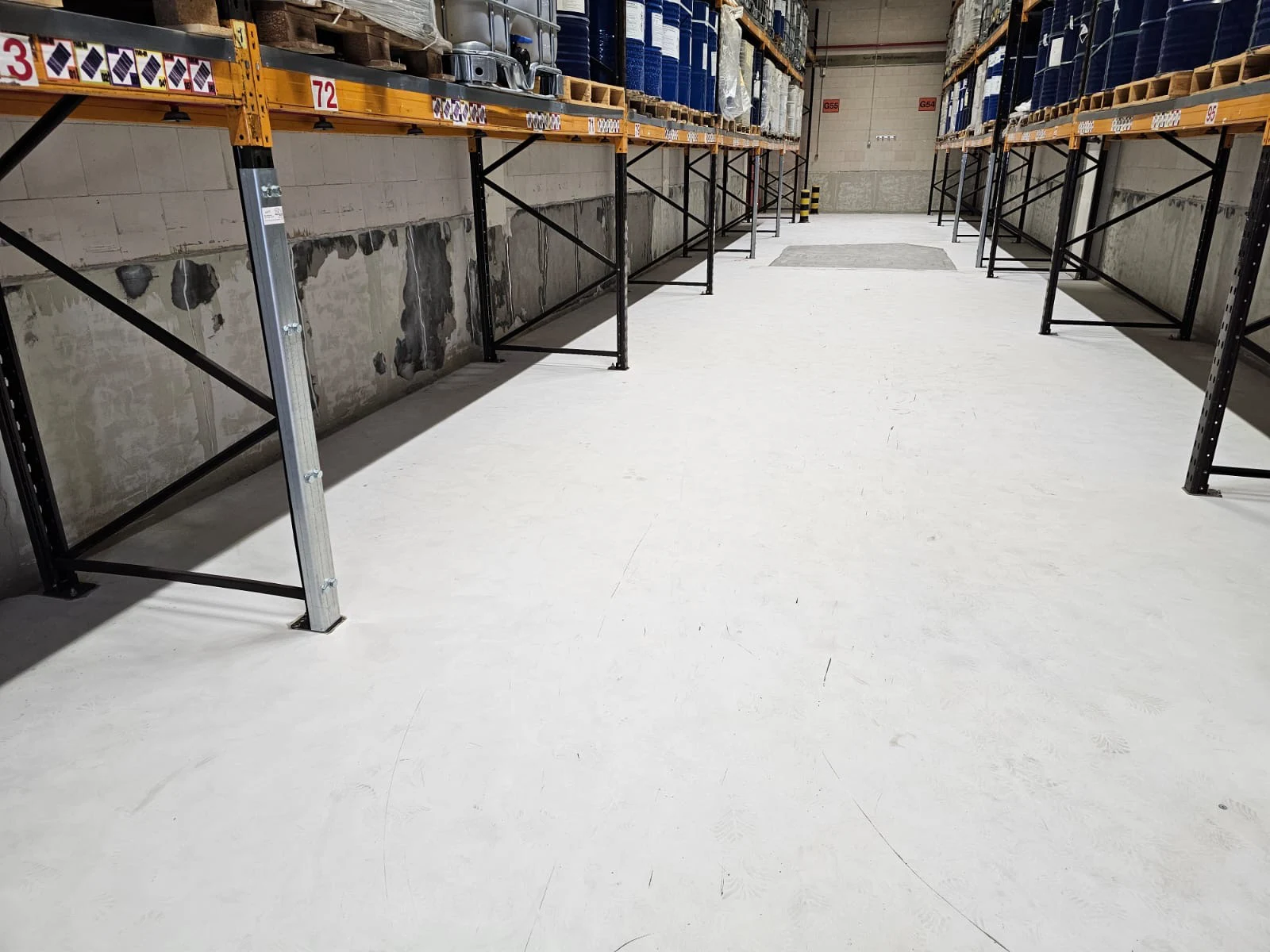
Chemical resistance is not a blanket product characteristic, but rather results from the interaction of the medium, concentration, temperature, exposure time, and cleaning. Critical areas are typically edges, transitions, and frequently exposed sections, because media act on these areas while mechanical abrasion also occurs. Quantec evaluates the requirements using media-specific logic and implements the solution as a retrofit to existing equipment—with predictable phase approvals.
Why Quantec?
Your Partner for Durable Industrial Floor Renovation
We don’t see ourselves as merely a service provider, but as a reliable partner by your side. Every renovation is planned carefully and precisely, carried out using high-quality materials, and designed for long-term use. This results in cost-effective and durable solutions for your industrial floor.

Consistency According to Media Logic
Design based on the medium, exposure time, and cleaning—not a “one-size-fits-all” approach.
Mechanics and Chemistry: A Combined Approach
Areas subject to abrasion and impact are taken into account in system planning.
Phased Implementation
Approvals based on zoning to ensure that operations and processes continue.
100% in-house work
Our own machinery; no subcontractors.
Why Floors Are Damaged Despite a “Chemical-Resistant Coating”
Chemical resistance is often viewed too broadly. In practice, media act locally, remain in contact for longer periods, or are combined with cleaning processes. As soon as a medium penetrates into edge areas, cracks, or joints, it causes under-cutting, swelling, or surface damage. At the same time, mechanical abrasion accelerates the attack because the surface is constantly under stress.
Typical triggers
Typical triggers
- Media contact in maintenance, filling, or cleaning zones
- Stagnant liquids in troughs, at transitions, or along joint edges
- Cleaning with chemicals, heat, or mechanical means (brushing/pressure)
- Cracks/chips as entry points for media
- Unclear requirements (medium, concentration, or exposure time not defined)

Chemical resistance is planned on a zone-by-zone basis and implemented as a system
Quantec designs chemical-resistant flooring based on a clear media logic: Which chemicals are used where, for how long, and how is the area cleaned? This results in zones where durability and surface performance are precisely engineered. The goal is a wear layer that withstands everyday use—not just under laboratory conditions.
Scope (clear):
New construction involving concrete/screed and click-system flooring will not be performed. PVC and asphalt surfaces will be repaired, but not newly installed.
Scope (clear):
New construction involving concrete/screed and click-system flooring will not be performed. PVC and asphalt surfaces will be repaired, but not newly installed.
From Damage Assessment to a Stable Foundation

Assessment

Milling a surface

Preparation

Grinding

Leveling layer

Durable Wearing Course

Sealing Layer

Completion
Services Related to Chemical-Resistant Industrial Flooring
Media Review & Job Description
- Inclusion of media (oils, cleaners, process chemicals—as per your list)
- Assessment of concentration, temperature, and exposure time (operational)
- Definition of zones: Where is which level of resistance required?
System Architecture (EP/AC/PU) by Media and Use
- Selecting the system direction based on usage and downtime (EP/AC/PU)
- Surface configuration suited to traction and cleanability
- Targeted design of hotspots (e.g., maintenance/filling zones)
Repair of Existing Structure Prior to Installation of a Chemical-Resistant Structure
- Repair of Joints in Break-Out and Entry Zones
- Crack repair to reduce the risk of water infiltration
- Stabilization of transitions and edge zones as critical chemical pathways
Interfaces for Special Requirements
- WHG-compliant design in areas subject to regulatory requirements
- Zoned slip resistance when moisture or the medium affects safety
- ESD integration when the zone must also be conductive
What Factors Really Determine Durability
Chemicals tend to attack areas where the surface and the underlying material are already weakened. For this reason, the entry points (cracks, edge zones, and transitions) are assessed first.
Relevant Factors
Medium
Type, Composition, Concentration
Exposure time
short-term, recurring, permanent/ongoing
Temperature
Influence of the medium/environment (operational)
Mechanics
Wear pattern, traffic, impact zones
Cleaning
Chemistry, Mechanics, Intervals (Effect on the Surface)
Inventory
Cracks, spalling, areas near joints, transitions
Time window
Blocking Period and Section Release
Phased Implementation: Stabilize Chemically Sensitive Areas First
Chemical exposure is often localized. Therefore, not everything is necessarily replaced across the entire surface; instead, the work is organized by zones: critical areas first, transitions defined, and approvals granted section by section.
Planning Components
Planning Components
- Segmentation by media zones (maintenance/filling/cleaning)
- Defined transitions between chemically critical and standard zones
- Off-peak/maintenance planning for sensitive processes
- Approval for each section based on the agreed-upon usage level
Typical Applications
Maintenance and service areas involving oil/lubricants
Filling and transfer areas containing process media
Areas requiring intensive cleaning with cleaning chemicals and moisture
Areas with recurring leaks or exposure to splashing
Areas where mechanical use and contact with media occur simultaneously
Media Check
Include the list of media, exposure time, cleaning, and usage.
Zoning & System Selection
Specify EP/AC/PU + surface function.
Secure Inventory
Repair entry points (hot spots, cracks, joints).
Setup & Approval
Phased implementation and controlled release.
Before
Afterward
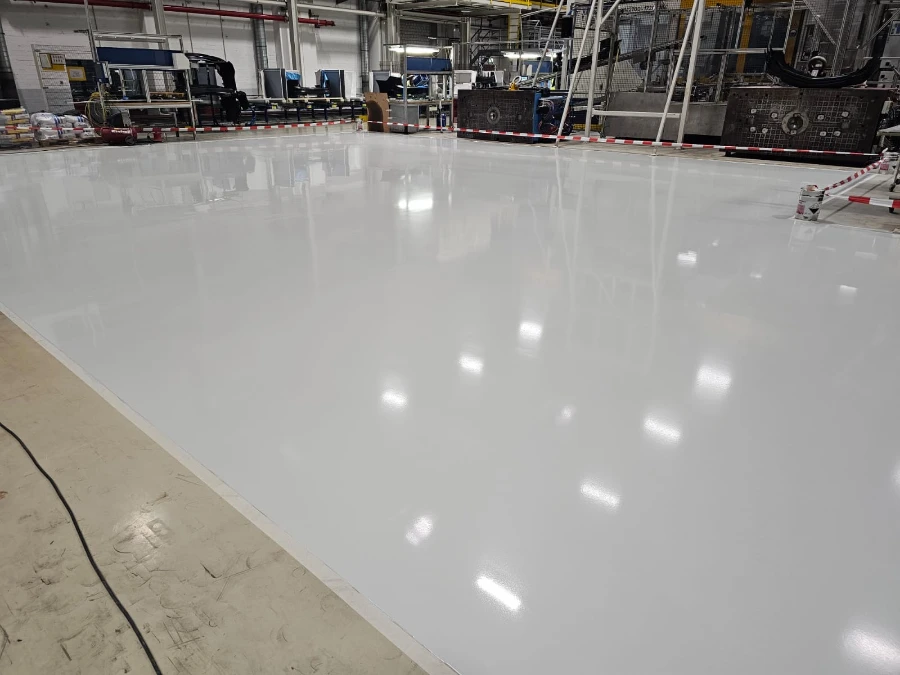
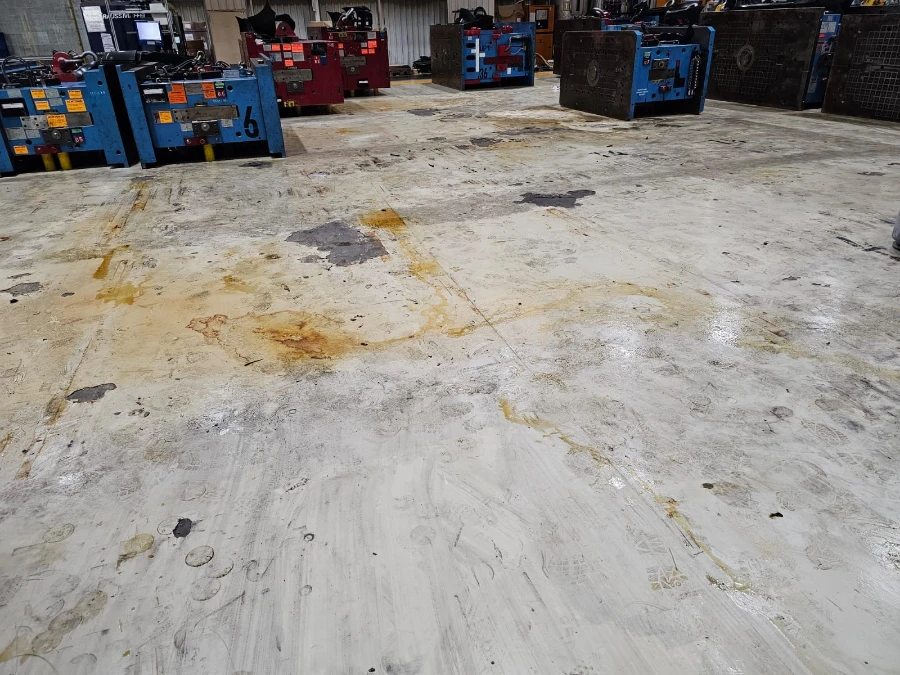
Oil/Chemicals/Cleaners · Contact Time · Cleaning · Hotspots · Scheduled Release
Types and Varieties of Chemical-Resistant Industrial Flooring
Acrylic resin (PMMA) flooring for chemical zones with a short downtime (quick-release version)
| Operating Principle | MMA systems react quickly and allow for repair or refurbishment within tight time frames; chemical resistance is achieved through the system’s chemistry and coating structure. |
| Delimitation | Prioritize this for tight operating windows (nighttime/weekends) and clearly defined media lists; not every aggressive chemical is automatically suitable. |
| Typical industrial applications | Gate and Delivery Areas, Service Axes, Hotspot Remediation During Normal Operations |
| Parameters (relevant to decision-making) | Industry-specific field | Interpretive Reference |
|---|---|---|
| Time window | approx. 2-8 hours | drives system selection (reactivity) |
| Release Time | about 1-3 hours (typically) | A phased reopening to traffic can be planned |
| Media Profile | defined, often cleaners/oils | Chemical compatibility depends on the medium |
| Coating thickness | approx. 2.0-5.0 mm | Ruggedness in Hotspot Zones |
| Temperature at the Time of Installation | environment-dependent | Reaction Kinetics and Process Stability |
| Examination/Grading Path | ISO 2812-1 / DIN EN 13529 | Classification of Media Resistance |
Chemical-Resistant Structural Rehabilitation (Hotspot Repair) in Spill and Maintenance Areas
| Typical industrial applications | Localized damaged areas are cut out/reprofiled and repaired using a mortar/coating system suitable for chemical exposure; the goal is to create a functional zone without a new edge joint line. |
| Delimitation | The focus is on repairability and rapid restoration to service, not on full-area logic. |
| Operating Principle | Leakage points, Pump/Valve Zones, Service Areas, recurring problem areas |
| Parameters (relevant to decision-making) | Industry-specific field | Interpretive Reference |
|---|---|---|
| Hotspot Area | local to several square meters | Degree of Intervention and Timing |
| Media Profile at the Hotspot | critical (defined) | Material/Topcoat Selection |
| Edge/Transition Target | flush, chamfered | Reduce impact energy; no new vulnerability |
| Installation Height | typically 10-50 mm (locally) | Flatness/Passability |
| Approval Logic | step by step | Operations will remain possible in certain sections |
| Examination/Grading Path | DIN EN 13529 / ISO 2812-1 | Evaluate Media Resistance for the Repair Zone |
Chemical-resistant sealant as a protective coating (thin, functional)
| Operating Principle | Thin-film coatings reduce porosity and make cleaning easier; suitable when there is contact with media, but high mechanical loads are not a major factor. |
| Delimitation | Not a suitable alternative for areas subject to high chemical or mechanical stress; its resistance to stagnant media is limited. |
| Typical industrial applications | Ancillary areas, Utility Rooms, Defined spray zones without a continuous setting |
| Parameters (relevant to decision-making) | Industry-specific field | Interpretive Reference |
|---|---|---|
| Exposure time | briefly (spark/flick contact) | Thin-film systems are time-critical |
| Coating thickness | approx. 0.3-0.8 mm | Sealing and Durability Reserve |
| Abrasion Profile | low-medium | mechanical limit of the seal |
| Cleaning Chemicals | defined | Film Education/Avoiding Attacks |
| Ground state | closed, stable | Adhesive Bonding and Pore Sealing |
| Examination/Grading Path | ISO 2812-1 | Resistance to liquids |
Chemical-Resistant Industrial Flooring in LAU/WHG zones (AwSV/WHG retention areas)
| Operating Principle | In LAU systems, the surface must effectively contain any spilled water-polluting substances; the sealing function is achieved through a system-compliant coating or waterproofing, combined with specific design details. |
| Delimitation | The sole objective here is not “chemical resistance,” but rather leak-tightness in the context of the system in accordance with WHG/AwSV (retention system, barrier logic). |
| Typical industrial applications | Containment Rooms/Trays, Filling Areas, Defined containment areas in industry and logistics |
| Parameters (relevant to decision-making) | Industry-specific field | Interpretive Reference |
|---|---|---|
| Equipment Purchase | LAU (Storage/Filling/Transshipment) | Specifies retention and sealing requirements |
| Barrier/Retention Principle | primary/secondary barrier, restraint system | Requirement under the AwSV/WHG |
| Media/WGK Logic | Substances Hazardous to Water (Operational) | The system must be compatible with the material class |
| Seal Detail Priority | Joints/Connections/Penetrations | Most common entry point into retention basins |
| Documentation/Engineering Guidelines | recognized, normative/practical | WHG Calls for Compliance with Recognized Rules |
| Examination/Grading Path | Certification- and system-specific + ISO/DIN tests | Verification is two-pronged (equipment and coating levels) |
Chemical-Resistant Industrial Flooring with media-resistant joint and connection sealing
| Operating Principle | The surface coating is supplemented with permanent detail points (joints, edge connections, penetrations) to limit water infiltration and entry paths. |
| Delimitation | Unlike “surface coating alone,” the level of detail is the key functional feature here, because leakage paths usually originate at interfaces. |
| Typical industrial applications | Filling/Cleaning Zones, Media Storage Areas, Plant environments where wet cleaning is frequently performed |
| Parameters (relevant to decision-making) | Industry-specific field | Interpretive Reference |
|---|---|---|
| Entry Path Risk | high in joints/connections | Small details make all the difference in a product\'s lifespan |
| Proportion of physical activity | low to moderate | Select the appropriate sealant and detail geometry |
| Media Profile | company-specific | Material compatibility depends on the medium |
| Connection Geometry | Defined Throats/Transitions | Voltage and Leakage Path Check |
| Cleaning/Pressure-Jet Profile | possible | mechanical stress on the components |
| Examination/Grading Path | ISO 2812-1 + system-specific data | Evaluate the seal and the surface separately |
Epoxy resin coating (EP) for areas exposed to oil, fuel, and cleaning chemicals
| Operating Principle | EP systems form a dense, mechanically robust wear layer; chemical resistance is determined by the resin/hardener composition and the cross-section of the coating. |
| Delimitation | EP is the standard option for many industrial chemicals, but it reaches its limits with highly oxidizing or highly concentrated media, depending on the system. |
| Typical industrial applications | Workshop and Service Areas, Storage Areas, Machine Environments, Cleaning areas using specified chemicals |
| Parameters (relevant to decision-making) | Industry-specific field | Interpretive Reference |
|---|---|---|
| Media Profile | Oils/Greases, Fuels, Cleaners (as defined) | System authorization is always media-specific |
| Operating Temperature | approx. 5-60 °C (typical) | chemical reaction rate/attack |
| Exposure time | Splash to standing | drives the selection of sealant details and topcoats |
| Coating thickness | approx. 1.5-4.0 mm | Spring Reserve vs. Mechanical Durability |
| Abrasion/Shear Profile | moderate to high | Zoning for Top Layer/Screed Logic |
| Examination/Grading Path | DIN EN 13529 / ISO 2812-1 | Comparability of Durability Data |
Novolac epoxy resin (EP-Novolac) for aggressive acids, alkalis, and solvents
| Operating Principle | Novolac epoxies increase chemical resistance to highly corrosive media (depending on the system) due to their modified resin structure. |
| Delimitation | Compared to the standard EP, this variant is prioritized when media lists contain “critical” chemicals or exposure times are longer. |
| Typical industrial applications | Chemical Handling, Filling/Transshipment Zones, Laboratory and Process Areas, Spill/Leak Areas |
| Parameters (relevant to decision-making) | Industry-specific field | Interpretive Reference |
|---|---|---|
| Media Profile | Acids/Alkalis/Solvents (critical) | Novolac Resin Instead of Standard EP |
| Concentration/Temperature/Exposure Time | company-specific | has a significant impact on durability |
| Coating thickness | approx. 2.0-6.0 mm | Durability Reserve and Sealing Effect |
| Surface finish | low-porosity, with a topcoat if necessary | Entry Paths and Cleanability |
| Traffic Profile | medium (zoned) | Novolac zones are often considered hotspots |
| Examination/Grading Path | DIN EN 13529 / ISO 2812-1 | Verification Logic for Liquid Exposure |
Polyurethane (PU) coating for dynamic loads with chemical exposure
| Operating Principle | PU systems combine dense surfaces with more elastic material behavior (depending on the system) and can provide more stable performance reserves in areas with varying loads. |
| Delimitation | Compared to EP, the focus is on suitability for dynamic loading and specific cleaning and temperature profiles; media-specific approval remains mandatory. |
| Typical industrial applications | Production/Logistics Transition Zones, Walkways and driveways cleaned regularly, Areas with moderate media coverage |
| Параметры (имеющие значение для принятия решения) | Типичная для данной отрасли сфера деятельности | Основание для толкования |
|---|---|---|
| Профиль в СМИ | Чистящие средства, масла, технологические добавки | разрешение на использование системы в средствах массовой информации |
| Перепады температуры | умеренный (в зависимости от конкретного предприятия) | влияет на напряженные состояния и прочность сцепления |
| Толщина слоя | около 1,5-3,5 мм | Резерв мощности в динамических зонах |
| Профиль царапин/следов | в зависимости от типа колеса | Стабильность дорожного покрытия на транспортных магистралях |
| Режим очистки | часто, определённый | Чистящие химикаты как постоянная нагрузка |
| Процедура проверки/оценки | ISO 2812-1 (Exposure to liquids) | Оценка воздействия жидкости |
Chemical-Resistant Industrial Flooring
A chemical-resistant industrial floor is a function-oriented restoration or coating and detail design for an existing floor, in which resistance to specific media (e.g., acids/alkalis, solvents, oils, cleaning chemicals) is ensured through the system chemistry, layer structure, and sealing details. Key factors for the design include the medium, concentration, temperature, and exposure time, as well as mechanical stresses (wheel load, shear, abrasion); Resistance is typically evaluated using standardized test methods (e.g., DIN EN 13529 for severe chemical attack, ISO 2812-1 for the effect of liquids on coatings). (DIN Media)
Quantec Industrieböden® GmbH implements chemical-resistant flooring systems for the rehabilitation and renewal of existing facilities — using epoxy resin, acrylic resin, and polyurethane systems, as well as media-resistant detailing at joints, connections, and penetrations.
Quantec Industrieböden® GmbH implements chemical-resistant flooring systems for the rehabilitation and renewal of existing facilities — using epoxy resin, acrylic resin, and polyurethane systems, as well as media-resistant detailing at joints, connections, and penetrations.

FAQ


Logistics & Warehousing
Manufacturing & Mechanical Engineering
Food & Hygiene
Cold Storage & Temperature Fluctuations
Chemistry/Media & WHG/AwSV
ESD & Special-Purpose Functional Surfaces
Media Check - Consistency That Fits Your Everyday Life
Please send us your media list and a brief description of how you plan to use it. You will receive a structured assessment of zoning and the appropriate system configuration.
The content of this page is intended to provide general information about Chemical-Resistant Industrial Flooring and does not constitute project-specific technical planning or a guarantee of specific properties. Since specific requirements and results depend on individual on-site conditions, no liability is assumed for the accuracy of this information.


INDUSTRIEBÖDEN ® GmbH

Your symptoms
The Quantec Solution
We will be happy to contact you.
Would you like a personal telephone consultation?