


You are here:
Acrylic resin coating—fast-curing systems for short closure times
Quantec Industrieböden® GmbH applies acrylic resin coatings based on methyl methacrylate (MMA) to existing industrial, logistics, and commercial spaces—designed for rapid reopening, durable transitions, and predictable implementation within tight time frames.

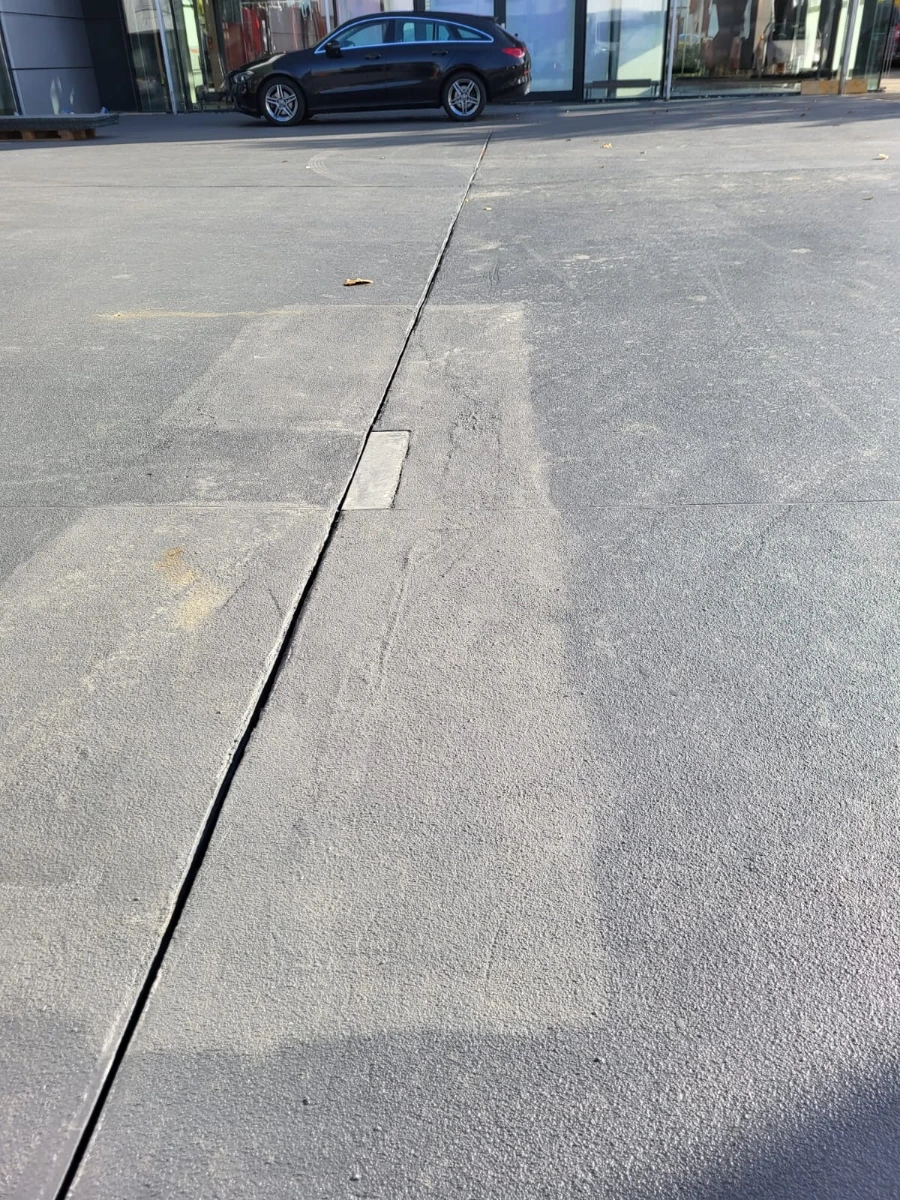
If roads can only be closed overnight or on weekends, a system is needed that can be put into use within a short timeframe. Acrylic resin coatings (MMA coatings) are suitable for time-sensitive repairs in traffic lanes, gate areas, and priority zones, provided that the installation and details are carefully planned. Quantec implements acrylic resin systems for repairs to existing surfaces; new concrete or screed installations, as well as click-lock flooring, are not included in the scope of services.
Why Quantec?
Your Partner for Durable Industrial Floor Renovation
We don’t see ourselves as merely a service provider, but as a reliable partner by your side. Every renovation is planned carefully and precisely, carried out using high-quality materials, and designed for long-term use. This results in cost-effective and durable solutions for your industrial floor.

Quick Reactivation
System design for narrow operating windows and prioritized zones.
Smooth Transitions Despite Time Pressure
Edge zones and detail points are seamlessly integrated into the design.
Phased Implementation
Approvals based on traffic logic to ensure that processes continue to run.
100% in-house work
Our own machinery—no subcontractors.
When operations do not allow for long downtimes
In logistics and production, restricted areas are often the bottleneck: detours are limited, main routes must remain open, and repairs must not “get out of hand.” Acrylic resin orMMA coatings are an option when fast curing and a defined return-to-service time are key priorities.
Typical application scenarios
Typical application scenarios
- Repairs are only possible during short windows (night / weekend / shift change)
- Hotspots in traffic lanes cause recurring disruptions
- Gate and ramp areas must be restored to service quickly
- Repeated minor repairs without a sustainable clearance strategy
- Prioritized sections should be stabilized one after another

Acrylic Resin Coating as “Approval Engineering”
Quantec is planning MMA-based (methyl methacrylate) acrylic resin coatings as a combination of system design and application process: Which areas need to be ready for use again and when, how are transitions handled, and what preparatory work is necessary to ensure the wear layer functions reliably over the long term?
Acrylic resin systems are characterized by very short curing times, quick application intervals, and rapid reopening of the surface. Shortly after application, treated areas can be walked on or used again. At the same time, the result is durable, water- and chemical-resistant surfaces that, depending on the system design, can be finished as smooth or slip-resistant.MMA coatings are solvent-free, available in various colors, and suitable for high-traffic areas.
This is how the material’s rapid reaction is translated into a controlled reopening schedule —tailored to usage, traffic volume, and time constraints.
From Damage Assessment to a Stable Foundation

Installing Drain Channels

Apply a leveling coat

Sanding the surface

Prime the surface

Coating complete
Services Related to Acrylic Resin Coatings
Existing Structure Repairs Prior to MMA
- Localized Repair in Areas of Spalling and Hotspots
- Crack repair when crack edges destabilize the service area
- Incorporation of areas near joints and transitions to prevent secondary damage
For quick repairs, Quantec uses methacrylate-based acrylic resin mortar. This high-strength repair mortar is particularly suitable for damaged concrete surfaces, ramp areas, or traffic lanes when repairs must be completed within a short timeframe.
Acrylic resin systems (MMA) as a wearing course
- System design tailored to time windows, traffic, and wear
- Surface configuration optimized for traction and cleanability
- Implementation in sections with defined transition zones
Acrylic resin coatings form durable wear layers that are water- and chemical-resistant and suitable for many industrial and logistics applications. Depending on the system design, smooth, easy-to-clean surfaces or slip-resistant coatings can be achieved.
Detailed Training and Interfaces
- Design transitions, edge zones, and edges to be structurally stable
- Combine with expansion joint rehabilitation in cases of joint-induced damage
- Optional mechanical protection using heavy-duty profiles in impact zones
Especially for projects with short road closures, the stable integration of transitions and edge zones is crucial to ensure that the wearing course functions reliably over the long term, even under heavy traffic loads.
What Factors Make Acrylic Resin a Success in Operation
Fast-curing acrylic resin or MMA coatings will only provide long-term performance if the system design, substrate, and usage requirements are properly coordinated.
Relevant Parameters (Selection)
Application Temperature
Approximately −5 °C to 30 °C is possible
Processing time
about 25 minutes
Curing / Walkability
about 25 minutes to a few hours
Mechanical Strength
easily accessible
Chemical Resistance
resistant to water and many industrial chemicals
Nighttime and weekend measures with defined traffic routing
Acrylic resin coatings are suitable for projects that must be started and completed within tight time frames. Implementation therefore involves clear phases, defined workarounds, and approvals on a zone-by-zone basis.
Components of Implementation
Components of Implementation
- Segmentation by traffic arteries and hotspots
- Defined transitions between treated and active areas
- Work carried out during off-peak hours in high-traffic areas
- Reopening by section according to the agreed-upon usage level

Typical Applications for Acrylic Resin Coatings
Logistics corridors and gate areas with minimal downtime
Lanes that can only be rerouted temporarily
Prioritized sub-areas that are to be rehabilitated in quick succession
High-volume, time-sensitive handling areas
Remediating hotspots as a “quick win” before undertaking a more extensive optimization
MMA Check
Time frames, usage, damage patterns, and priority areas are recorded.
Section Planning
Zones, transitions, and authorizations are defined based on traffic logic.
Prepare Inventory
Damaged areas, edges, cracks, and joints are stabilized.
Coat and Release
Implementation to be carried out in-house, followed by approval for each section as defined.
Before
Afterward
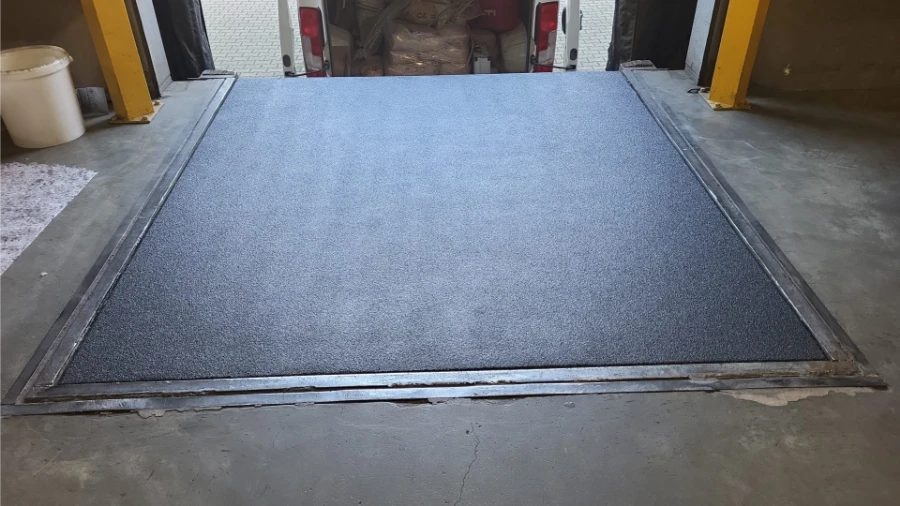
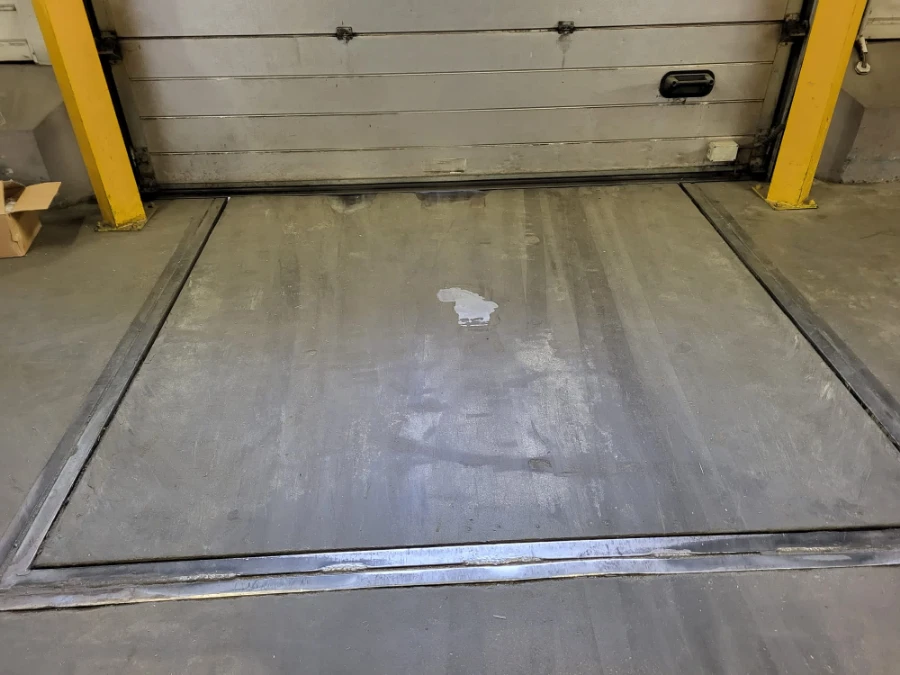
Nighttime/Weekend Windows · Rapid Approval · Lanes & Crossings · Predictable Implementation
Types and Varieties of Acrylic Resin Coatings
MMA-dischargeable (ESD) for short-cycle ESD zones
| Operating Principle | Conductive properties are integrated into the MMA system to combine short shutdown times with functional requirements. |
| Delimitation | Transitions to standard areas are critical to functionality and safety. |
| Typical Uses | ESD Pathways, Defined ESD islands, Changes During Operation |
| Interpretation criterion | Industry-specific field | Decision relevance |
|---|---|---|
| Zoning Concept | ESD Zones | Clear boundaries are necessary |
| Abrasion Profile | low-medium | Functional stability |
| Cleaning | defined | Surface uniformity |
| Release Time | briefly | Time Window Logic |
| Interfaces | Grounding/Discharge Path | Integration on a project-by-project basis |
| Transitional Training | mandatory | no interruption in service |
MMA spreading system for high-friction, rapidly usable traffic surfaces
| Operating Principle | The dispersed structure provides traction; the sealing agent determines pore closure and maintenance properties. |
| Delimitation | Significantly higher traction than the baseline; cleanability depends heavily on the degree of structure and the amount of contamination. |
| Typical Uses | Intersections, Ramps, Goal Areas, Areas Prone to Moisture and Dirt |
| Interpretation criterion | Industry-specific field | Decision relevance |
|---|---|---|
| System Thickness | 3,0-7,0 mm | Structural Load-Bearing Capacity for Traffic |
| Target Traction | define by zone | Risk Zones ≠ Standard Areas |
| Cleaning Effort | structure-dependent | The care process must be a good fit |
| Impact/Shear Zones | high | Suitable for changes in direction |
| Approval for Access/Vehicle Traffic | very short | Optimal Use of Operating Windows |
| Transitions | defined | Prevents sharp edges at zone boundaries |
MMA Cold-Weather/Winter Version (time-sensitive projects at low temperatures)
| Operating Principle | The system and reaction control are selected so that curing and release can still be scheduled even at low ambient temperatures. |
| Delimitation | Not a separate "ground type," but rather a configuration option for temperature windows. |
| Typical Uses | Gate areas near the perimeter, unheated sections of the hall, Winter Window |
| Interpretation criterion | Industry-specific field | Decision relevance |
|---|---|---|
| Temperature range | low to moderate | Operational Responsiveness |
| Odor/Ventilation Logic | project-dependent | Operational Organization |
| Approval Logic | step by step | Verified commencement of use |
| Surface structure | zoned | Entry/Slip Hazard |
| Detail Zones | particularly critical | Preventing Edge Failure |
| Section Planning | mandatory | Bypasses in Cold Zones |
MMA Repair Mortar for Hot Spots and Edge Reprofiling
| Operating Principle | Mortar backfilling restores load-bearing capacity and geometry in local areas of spalling and transition zones. |
| Delimitation | This involves repairing the structure; the wearing course can then be applied as an MMA self-leveling coating or screed. |
| Typical Uses | Lane Departures, edges near joints, Goal Lines, areas where point loads predominate |
| Interpretation criterion | Industry-specific field | Decision relevance |
|---|---|---|
| Local installation height | 5-25 mm | Contour for Clearance Level |
| Release Time | very short | Suitable for night windows |
| Edge Profile | defined | Impact Load Reduction |
| Combination | MMA Coating/Scattering | Wearing course on a stable base |
| Ground state | Required to be load-bearing | Liability in the Existing Zone |
| Hotspot Delimitation | zonal | Reinforce only the critical points |
MMA self-leveling coating for fast-curing, seamless wear layers
| Operating Principle | The fast-reacting mixture produces a homogeneous wear layer; curing is influenced by the system and the environment. |
| Delimitation | Cures faster than other systems; less tolerant of unstable existing edges; requires a load-bearing substrate preparation |
| Typical Uses | Time-sensitive production and transportation areas with a predictable nighttime/weekend schedule. |
| Interpretation criterion | Industry-specific field | Decision relevance |
|---|---|---|
| Wear layer thickness | 2,0-4,0 mm | Reserve vs. Flatness and Transitions |
| Accessibility | approx. 30-90 min | Release in Short Windows |
| Transportability (Transport) | about 1-3 hours | Gradual resumption of traffic |
| Temperature/Climate Reference | relevant | Response and Planning |
| Surface function | smooth to finely textured | Cleaning vs. Basic Traction |
| Detail Zones | highly critical | Edges must be stable beforehand |
Acrylic Resin Coating (AC/MMA)
An acrylic resin coating (AC/MMA) is used when technical repairs must be completed within very short closure periods and approvals must be granted within tight operational windows. In logistics corridors, gateways, and bottlenecks, impact and shear forces predominate; as a result, the detailed design at transitions and edges is more critical than the surface itself.
Quantec Industrieböden® GmbH implements MMA systems in existing facilities with zoned clearance logic and, when necessary, combines them with mortar builds-up to stabilize hotspots. The selection of variants typically follows the primary objective of “reopening time” and is subsequently refined based on load and cleaning profiles.
Quantec Industrieböden® GmbH implements MMA systems in existing facilities with zoned clearance logic and, when necessary, combines them with mortar builds-up to stabilize hotspots. The selection of variants typically follows the primary objective of “reopening time” and is subsequently refined based on load and cleaning profiles.

FAQ


Logistics & Warehousing
Manufacturing & Mechanical Engineering
Food & Hygiene
Chemistry/Media & WHG/AwSV
Cold Storage & Temperature Fluctuations
ESD & Special-Purpose Functional Surfaces
Request an Acrylic Resin Coating—When a Short Downtime Is Critical
Please send us the time frames, usage, and affected zones. You will receive a structured assessment of the MMA implementation in your existing facility.
The content of this page is intended to provide general information about Acrylic resin coating and does not constitute project-specific technical planning or a guarantee of specific properties. Since specific requirements and results depend on individual on-site conditions, no liability is assumed for the accuracy of this information.


INDUSTRIEBÖDEN ® GmbH

Your symptoms
The Quantec Solution
We will be happy to contact you.
Would you like a personal telephone consultation?